
TL;DR:
- Bass music styles vary widely in tempo, sound design, and rhythmic feel, shaping their distinct genres. Producers must master these variables to create authentic sounds across Drum & Bass, Dubstep, Bass House, and Grime. Effective frequency management and simple sound design techniques are crucial for clear, powerful mixes.
Bass music production styles are distinct electronic genres defined by unique BPM ranges, bass sound design, and rhythmic structures. Understanding how these styles differ gives producers a real edge. Whether you work in Drum & Bass, Dubstep, Bass House, or Trap, each genre demands a specific approach to synthesis, mixing, and groove. The bass music genres covered here share one thing: the low end is the lead instrument, not an afterthought.
1. Bass music production styles compared: tempo and rhythmic feel
Tempo is the first thing that separates bass music genres from each other. Bass music spans Drum & Bass at 160–180 BPM, Dubstep and Riddim at 140–150 BPM, Bass House and UK Garage at 128–135 BPM, and Grime sitting at 140 BPM. That range is wide. A producer working at 170 BPM is building a completely different rhythmic world than one working at 128 BPM.
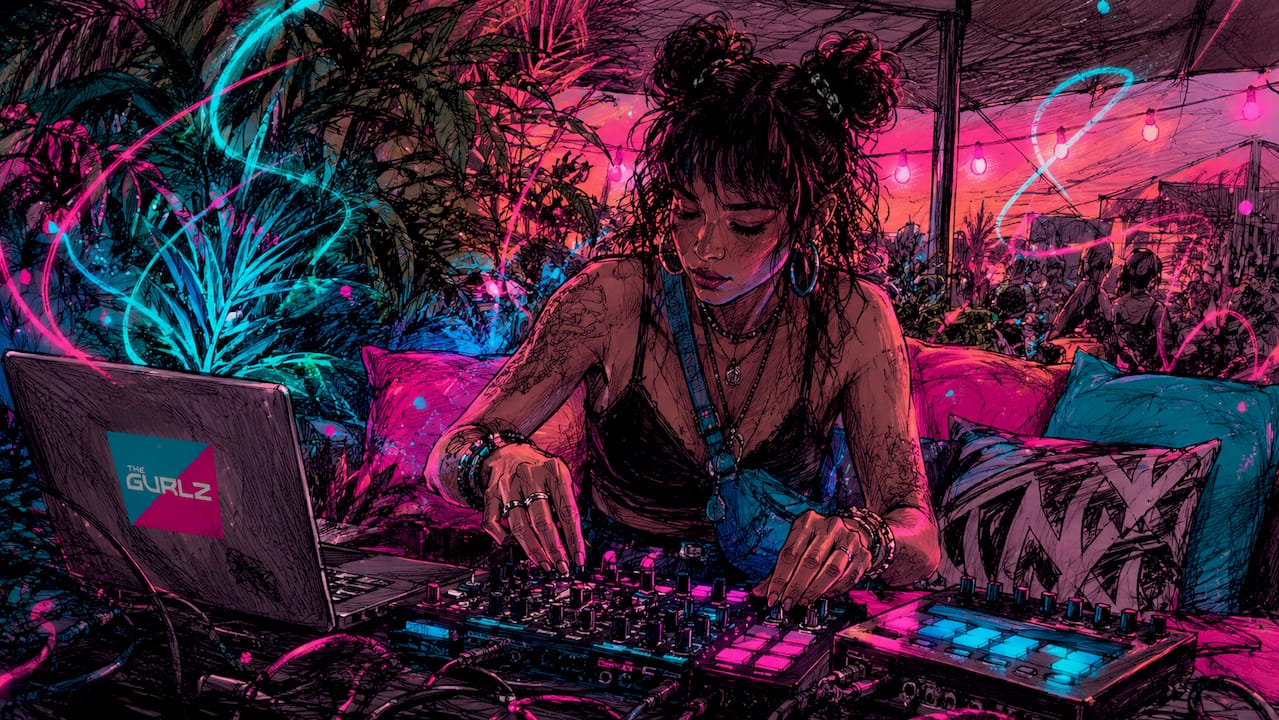
Drum & Bass uses breakbeats, chopped and resampled from classic funk and soul records. The snare lands on the second and fourth beats, but the kick weaves around it in syncopated patterns that create forward momentum. That rolling feel is what separates DnB from everything else at a similar tempo.
Dubstep operates at 140 BPM but feels much slower because the snare hits on beat three instead of two and four. This half-time illusion is a deliberate production choice. It creates space, weight, and tension that a standard four-on-the-floor pattern cannot achieve. Producers who understand this illusion use reverb and room size to amplify the sense of space between hits.
UK Garage and Bass House use swung, off-grid beats. The shuffle feel comes from pushing and pulling the hi-hat and snare slightly off the straight grid. That swing is what makes the groove feel alive rather than mechanical.
| Genre | Typical BPM | Drum Pattern | Groove Feel |
|---|---|---|---|
| Drum & Bass | 160–180 | Breakbeat, syncopated kick | Rolling, forward-driving |
| Dubstep / Riddim | 140–150 | Half-time, snare on beat 3 | Heavy, spacious |
| Bass House / UK Garage | 128–135 | Swung, shuffled hi-hats | Bouncy, hypnotic |
| Grime | 140 | Sparse, angular patterns | Dark, staccato |
Pro Tip: If a Dubstep track feels too busy, pull the snare reverb tail longer. The half-time illusion depends on that decay filling the space between hits.
2. How sound design techniques vary across bass music genres
Sound design in bass music starts with four universal building blocks: oscillators, filters, envelopes, and LFOs. Every genre uses all four. The difference is how aggressively each element gets pushed.
Sine waves form the foundation of sub bass across every style. They produce clean, pure low-end energy with no harmonic content above the fundamental. Saw waves add harmonics and brightness, making them the go-to for leads and mid-bass layers. Square waves produce a woody, hollow tone that works well for melodic bass in house and garage.
The Reese bass is the defining sound of Drum & Bass. It uses two detuned saw wave oscillators with an LFO modulating the filter cutoff. The slight pitch offset between the oscillators creates a beating, alive quality. The LFO movement gives it motion over time. No other bass style leans on this technique as heavily as DnB.
FM synthesis produces metallic, harmonically complex tones that subtractive synthesis cannot replicate. House and neuro bass producers use FM to create attack-heavy bass sounds with a sharp transient and a rich harmonic tail. The carrier oscillator sets the pitch. The modulator oscillator shapes the timbre. Adjusting the modulator’s envelope decay changes how quickly the harmonic content fades.
Trap music centers on the 808 sub bass. The 808 is a pitched sine wave with a long, slow decay. It functions as both a bass instrument and a melodic element. Producers tune each 808 hit to the key of the track. Riddim takes a different path, using groove-focused repeating basslines with minimal melody and maximum rhythmic impact.
- Sine wave sub: Clean low-end foundation, used across all bass genres
- Detuned saw (Reese): Iconic in DnB, creates movement through oscillator beating
- FM bass: Metallic, complex tone for house and neuro styles
- 808 sub: Pitched, melodic sub used in Trap and hip hop bass production
- Distortion on mid-bass: Adds harmonic content that translates on small speakers
- LFO filter modulation: Creates wobble and movement in Dubstep and Riddim
Pro Tip: Layer a distorted mid-bass on top of a clean sine sub. The sine handles the low-end weight. The distorted layer carries the bass through laptop speakers and earbuds.
3. Mixing techniques and frequency management in bass music
Frequency management is where most producers lose clarity in their mixes. The sub bass and kick drum occupy the same frequency range, roughly 40–100 Hz. Without careful separation, they fight each other and the mix turns muddy.
Professional producers high-pass the main bass layer at 80 Hz with a steep slope. They low-pass the sine sub layer around 90–100 Hz with a gentler slope to preserve body. This creates a clean handoff between the sub and the mid-bass. Each layer occupies its own frequency window without overlap.
Midrange buildup is the other common problem. Cutting 4–6 dB in the 200–500 Hz range removes the muddiness that accumulates when multiple bass layers stack up. This cut opens space for the kick and snare to punch through without competing with the bass.
Sidechain compression is a technical requirement for clean low-end in bass music. Effective sidechain settings use an attack of 0–5 ms, a release of 80–150 ms, and a ratio of 6:1 or higher. The fast attack catches the kick transient immediately. The medium release lets the bass return before the next beat. That timing creates the pumping groove that defines bass music on a club system.
- High-pass main bass at 80 Hz: Removes sub frequencies from mid-bass layer
- Low-pass sub sine at 90–100 Hz: Keeps sub clean and focused
- Cut 4–6 dB at 200–500 Hz: Clears midrange mud from stacked bass layers
- Sidechain attack 0–5 ms: Catches kick transient before bass returns
- Sidechain release 80–150 ms: Allows bass to recover naturally between kicks
- Phase check all bass layers: Prevents cancellation that kills low-end energy
Phase cancellation is a real risk when layering bass sounds. Two bass layers with opposite phase relationships cancel each other out, reducing low-end energy instead of adding it. Flip the phase on one layer and compare the result. Choose whichever position sounds fuller.
4. Practical tips for producers comparing bass music styles
Mastering oscillators, filters, envelopes, and LFOs produces better results than collecting complex plugins. These four components build every bass sound in every genre. A producer who understands them deeply can recreate any bass style from scratch.
Simple oscillator patches with minimal modulation mix better and hit harder on large sound systems. Minimal modulation preserves the fundamental bass character. Complex patches with multiple LFOs and heavy effects processing often lose their impact when played loud. The fundamental frequency gets buried under movement and noise.
Genre hybridization is where the most interesting bass music happens right now. The expansion from Dubstep to the broader bass music umbrella reflects a scene that has matured past strict BPM rules. Producers now blend DnB rhythms with Dubstep sound design, or apply Trap 808 techniques to Bass House arrangements. THE GURLZ move through drum and bass, breakbeats, halftime, and house within a single set. That fluidity is a production skill, not just a DJ skill.
- Start with a single oscillator: Build complexity only after the fundamental sounds right
- Automate filter cutoff over time: Creates movement without adding modulation sources
- Reference your bass on a mono speaker: Reveals phase and frequency problems early
- Learn one genre deeply before blending: Hybrid styles work best when both source genres are understood
- Use automation instead of heavy effects: Evolving a sound over 8 bars creates interest without cluttering the mix
Pro Tip: When blending two bass styles, keep the drum pattern from one genre and the bass sound design from the other. The contrast between familiar rhythm and unfamiliar tone is what makes a hybrid feel fresh.
You can explore original bass electronic music to hear how producers apply these techniques across genres. For a deeper look at how tempo shapes the listening experience, the complete BPM guide for dancers breaks down how each genre’s tempo affects movement and energy on the floor.
Key takeaways
Bass music production styles differ most in tempo, drum pattern, and synthesis approach, and mastering those three variables gives producers the foundation to work across every genre.
| Point | Details |
|---|---|
| Tempo defines genre identity | DnB runs 160–180 BPM, Dubstep 140–150, Bass House 128–135. |
| Sound design varies by genre | Reese bass defines DnB; FM bass shapes house; 808 sub drives Trap. |
| Frequency management is critical | High-pass at 80 Hz and low-pass at 90–100 Hz to separate bass layers cleanly. |
| Sidechain compression creates groove | Use 0–5 ms attack and 80–150 ms release at 6:1 ratio for punchy low-end. |
| Simple patches mix better | Minimal modulation preserves bass character and translates better on club systems. |
What bass music taught us about making sets that actually hit
By THE GURLZ OFFICIAL
Producers often ask which bass style is “best.” That question misses the point. Each style solves a different problem. DnB solves momentum. Dubstep solves weight. Bass House solves groove. When we build a set, we are not picking a favorite. We are reading what the moment needs.
Bass & Breakz at Sunset Cliffs started with that logic. The location was open, wide, and golden. The set needed movement and air. Breakbeats and rolling bass fit that space. House in the Wild took a different direction. Slower, more hypnotic. The bass sat lower in the mix and the groove did more work.
The biggest production lesson we have learned is that the low end tells the truth. You can layer effects, automate everything, and process every sound. But if the sub and kick are fighting, the mix falls apart on a real system. Frequency management is not a technical detail. It is the foundation.
Genre hybridization works when you know the rules well enough to break them deliberately. We blend DnB rhythms with house bass design, or run halftime patterns under tribal percussion. The contrast creates tension. Tension creates energy. That energy is what makes a set feel alive rather than predictable.
— THE GURLZ OFFICIAL
THE GURLZ audio-visual DJ sets: bass production in motion
THE GURLZ take these production techniques out of the studio and into real locations. Bass & Breakz at Sunset Cliffs and House in the Wild are both produced, filmed, mixed, and edited by Desi and Angelina. The music is mixed live. The visuals come from the location itself.
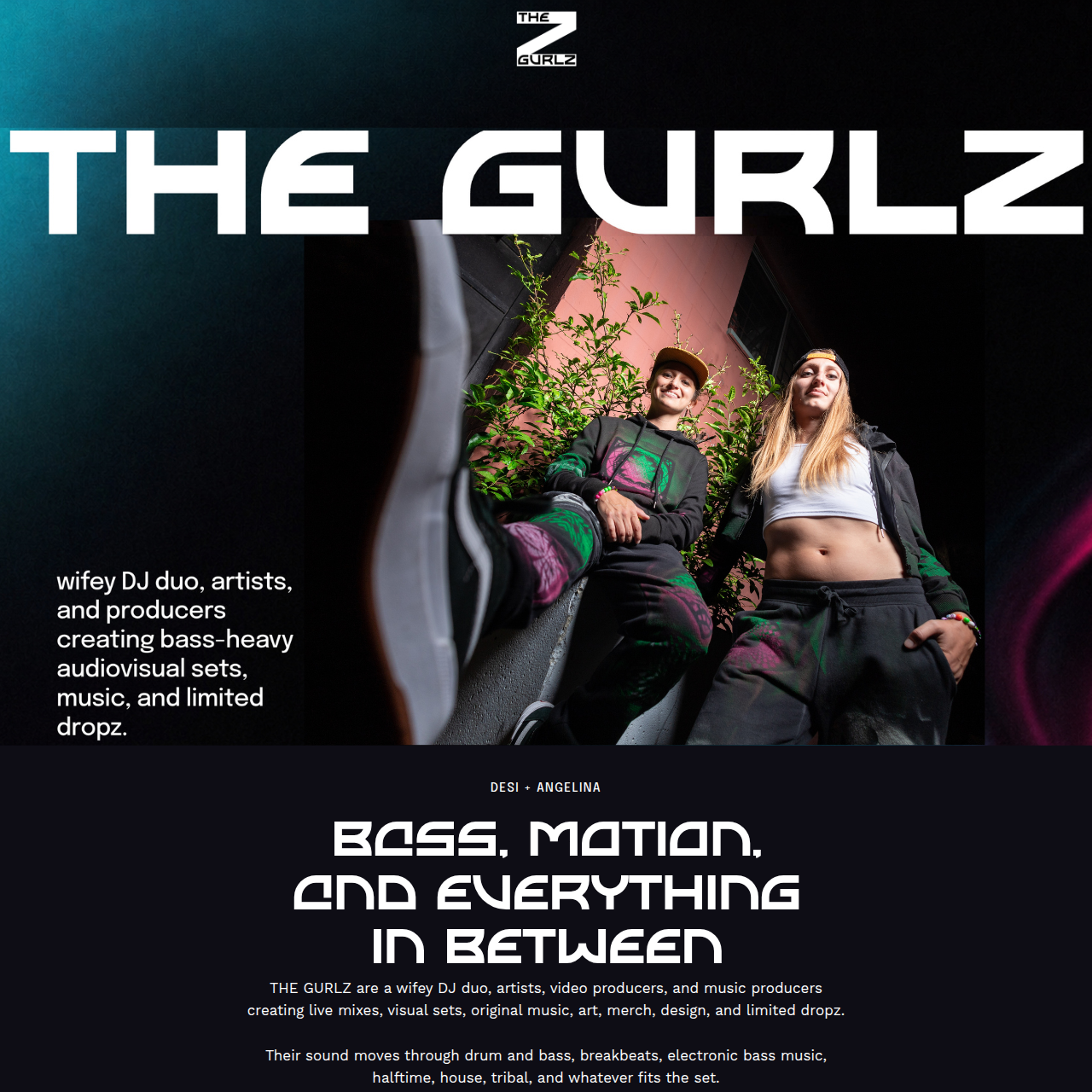
Every set moves through drum and bass, breakbeats, halftime, and house. The bass production choices shape the mood of each release. You can see and hear how these techniques land in a real environment by watching the full audio-visual DJ sets from THE GURLZ. For more context on what makes this format distinct, the guide to visual sets in music explains how the format works and why it hits differently than a standard DJ performance.
FAQ
What BPM ranges define the main bass music genres?
Bass music spans Drum & Bass at 160–180 BPM, Dubstep and Riddim at 140–150 BPM, Bass House and UK Garage at 128–135 BPM, and Grime at 140 BPM. Each tempo range produces a distinct rhythmic feel and energy level.
What is the Reese bass and which genre uses it?
The Reese bass is built from two detuned saw wave oscillators with LFO filter modulation. It is the defining bass sound of Drum & Bass and creates a moving, alive quality that static patches cannot replicate.
Why does Dubstep feel slower than its actual BPM?
Dubstep’s half-time feel places the snare on beat three instead of two and four, creating a perceptual illusion that the tempo is half its actual speed. Producers use long reverb tails and spacious arrangements to reinforce this effect.
How do you keep bass and kick from clashing in a mix?
High-pass the main bass layer at 80 Hz and low-pass the sub sine around 90–100 Hz. Add sidechain compression with a fast attack of 0–5 ms and a release of 80–150 ms to carve space for the kick transient.
What is the most effective approach to learning bass sound design?
Mastering the four core components of oscillators, filters, envelopes, and LFOs produces better results than chasing complex plugins. Simple patches built on these fundamentals mix more clearly and translate better on large sound systems.
IG: @thegurlzmusic, main social for behind-the-scenes and exclusive content
TikTok: @thegurlzofficial
Youtube: @TheGurlzOfficial
SoundCloud: https://soundcloud.com/thegurlz
www.thegurlzofficial.com
Recommended
- House vs. Bass Music: What’s the Real Difference? – ☀︎THE GURLZ ☽ – WIFEY DJ DUO / ARTISTS / PRODUCERS
- How to Find Original Bass Electronic Music – ☀︎THE GURLZ ☽ – WIFEY DJ DUO / ARTISTS / PRODUCERS
- What Is Rolling Bass in DnB: A Producer’s Guide – ☀︎THE GURLZ ☽ – WIFEY DJ DUO / ARTISTS / PRODUCERS
- ☀︎THE GURLZ ☽ – WIFEY DJ DUO / ARTISTS / PRODUCERS – DNB • BASS • HALFTIME • HOUSE • BREAKBEATS • TRIBAL


