
TL;DR:
- Bass music tempos range from 70 to 180 BPM, shaping dance movements and energy levels. Matching movement style and stamina to specific tempo zones and bass textures creates intentional performances and enhances connection to the music.
Bass music tempos for dancers are defined by beats per minute (BPM) ranges specific to bass-heavy electronic genres, and each range directly shapes how you move, how much energy you spend, and how deeply you connect to the music. The core spectrum runs from 70–180 BPM, covering downtempo bass, dubstep, and drum and bass. Knowing where each genre sits on that spectrum is not optional knowledge for movement artists. It is the foundation of every good performance decision you make.
1. Bass music tempos for dancers: the full BPM spectrum
The three primary bass genres each occupy a distinct tempo zone. Downtempo bass sits at 70–100 BPM, dubstep locks in at 140 BPM, and drum and bass runs 170–180 BPM. That spread is wider than most dance music categories, which means your movement vocabulary needs to stretch just as far.
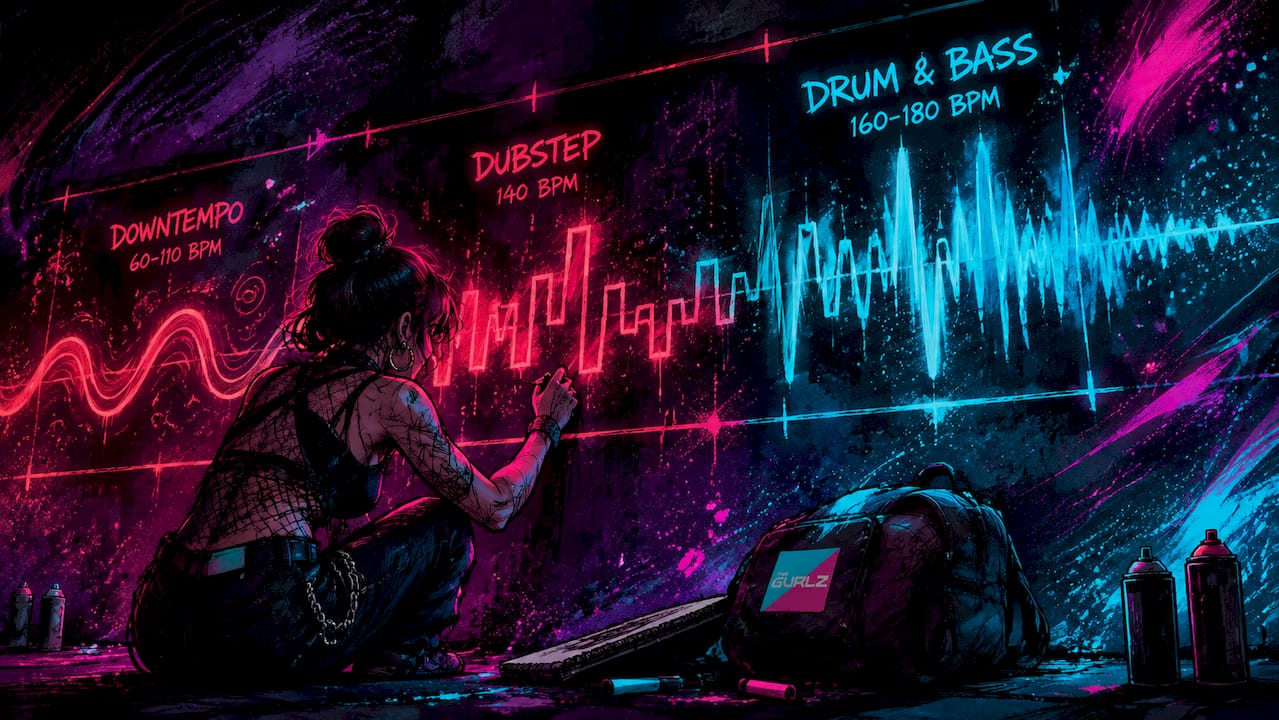
Each zone demands a different physical approach. Downtempo invites large, slow, deliberate movements. Drum and bass compresses time so tightly that your steps must shrink and quicken to stay on beat. Dubstep sits in the middle, but its half-time groove means most dancers feel it closer to 70 BPM even when the track is technically running at 140 BPM.
Pro Tip: When you first hear a new bass track, count the kick drum for eight seconds and multiply by 7.5. That gives you a fast BPM estimate without a metronome.
2. The biomechanical sweet spot for extended dance
The ideal BPM range for most extended dance sessions is 118–135. Below 118 BPM, movement can feel sluggish and hard to sustain with energy. Above 135 BPM, physical fatigue builds faster than most dancers expect.
This range matters most for choreography and long sets. If you are building a performance that runs 20 minutes or more, anchoring your core sections in the 118–135 BPM zone gives your body a sustainable rhythm. You can push into faster or slower zones for contrast, but returning to this range lets you recover without losing momentum.
Bass music often sits outside this sweet spot by design. That is what makes it interesting and physically demanding at the same time.
3. Downtempo bass: 70–100 BPM and halftime movement
Downtempo bass runs 70–100 BPM and rewards large, rolling, full-body movement. The slower pulse gives you more time between beats, which means more space to extend, stretch, and let weight settle into the floor. This is the zone where grounded, earthy movement styles feel most natural.
Halftime genres, including halftime drum and bass, are often perceived at half their technical BPM. A track running at 160 BPM with a halftime feel lands closer to 80 BPM in the body. That perceptual shift is not a mistake. It is a feature. Dancers who recognize it can move with far more intention and less physical strain.
The challenge with downtempo is filling the space. Slower tempos expose hesitation. Every movement needs weight and commitment to read clearly.
4. Dubstep at 140 BPM: the half-time groove
Dubstep is technically a 140 BPM genre, but most dancers feel and move to it at 70 BPM. The bass drops and rhythmic emphasis fall on the half-time grid, not the full tempo grid. Locking into that half-time groove is the difference between dancing with the music and dancing at it.
The wobble bass that defines classic dubstep is a sustained bass type. Sustained bass suits smooth, rolling movement rather than sharp, staccato gestures. When the bass swells, your movement should swell with it. When it cuts, your body can cut too.
Dubstep’s tempo also creates natural dramatic moments. The drop is a choreographic cue as much as a musical one. Movement artists who treat the drop as a structural anchor build performances that feel intentional and connected.
5. Drum and bass: dancing at 170–180 BPM
Drum and bass at 170–180 BPM compresses real time significantly. At 170 BPM, 16 bars last roughly 7 seconds. That leaves almost no margin for hesitation or large movements. Every step, gesture, and transition must be smaller and faster than in any other bass genre.
Faster tempos require smaller, more frequent movements to complete patterns within the available time per beat. This is not a limitation. It is a design constraint that forces precision. Dancers who try to use full-body sweeping movements at 170 BPM fall behind the music almost immediately.
The Amen break and rolling basslines in drum and bass reward footwork, quick isolations, and sharp upper-body accents. Think of the movement as a series of small, fast decisions rather than one continuous flow.
Pro Tip: If drum and bass feels too fast to track, drop your focus from the snare to the bass line. The bass often moves in a slower, more danceable pattern even when the drums are flying.
6. How bass rhythm type shapes your movement style
Bass energy does not always match tempo. A fast track can carry low energy. A slow track can carry enormous tension and weight. Dancers who rely only on BPM to judge intensity miss half the information the music is giving them.
The texture of the bass itself is the other half. Plucky bass supports fast, staccato movement. Think short, sharp gestures, quick isolations, and percussive footwork. Sustained bass, the kind that holds and breathes across multiple beats, suits smoother, more legato movement styles. Melodic bass music and progressive house both use sustained bass to create that rolling, continuous feel.
“The bass is not just the rhythm. It is the texture of the movement itself. When you match your style to the bass type, the performance stops looking like dancing to music and starts looking like music made visible.”
Matching your movement style to the bass type creates cohesion. When the two are mismatched, even technically strong dancing looks disconnected from the track.
7. Practical tempo-to-movement mapping
This table gives you a working reference for selecting music based on your movement goals.
| Tempo zone | BPM range | Typical genres | Movement style |
|---|---|---|---|
| Slow groove | 70–100 | Downtempo bass, halftime | Large, grounded, rolling movements |
| Moderate pace | 118–135 | House, melodic bass | Fluid, sustained, full-body flow |
| High energy | 140 | Dubstep | Half-time groove, dramatic accents |
| Speed precision | 170–180 | Drum and bass | Small, fast, precise isolations |
Use this table as a starting point, not a fixed rule. The best dance music tempos for a given performance depend on your stamina, your style, and the specific track’s bass character. A 140 BPM dubstep track with a heavy half-time feel dances nothing like a 140 BPM track with a straight four-on-the-floor kick.
Pro Tip: Build a tempo-sorted playlist for rehearsal. Start at 118 BPM, work up to 135 BPM, then push into 140 and 170 BPM zones in short bursts. This trains your body to shift movement scale on demand.
8. Half-time and double-time perception
A 186 BPM track can be felt and danced at 93 BPM when you follow the bass groove instead of the drums. This half-time and double-time perception phenomenon is one of the most useful tools a movement artist can develop. It lets you reinterpret tempo and find a groove that fits your body without fighting the music.
The reverse is also true. A slow track with a driving bass line can be danced at double its technical BPM by focusing on subdivisions. This doubles your movement options without changing the music at all.
Developing this perception takes practice. Start by listening to drum and bass and consciously shifting your focus from the snare to the bass line. Notice how the groove changes. Then try moving to each interpretation and see which one feels more natural for the specific track.
9. Managing stamina across a full bass music set
Long dance sets with varying bass tempos demand physical planning. Moving at 170 BPM for extended periods burns energy fast. Moving at 70 BPM for too long can cause dancers to lose momentum and connection.
The most effective approach is to treat tempo zones as energy states. Use slower zones for recovery and larger expressive movements. Use faster zones for intensity and precision. Build your set or choreography so the tempo arc mirrors the physical arc you want your body to follow.
Quick transitions at extreme tempos require sharp, decisive movement rather than gradual blending. At 170 BPM, a slow transition reads as confusion. A fast cut reads as control. The same principle applies to your movement choices at the tempo boundaries.
10. Bass clarity and its effect on dancer rhythm perception
Mono sub-bass below 100 Hz prevents phase cancellation in live settings. Phase cancellation occurs when the same bass frequency arrives at your ears at slightly different times from different speakers, causing the bass to partially cancel itself out. The result is a muddy, inconsistent low end that makes it harder to lock into the groove.
This matters most for dancers performing in live venues. When the sub-bass is clear and consistent, your body can track the rhythm without conscious effort. When it is muddy, you are working harder to find the beat. If a venue’s bass feels unclear, move closer to the center of the room where the sound system is most balanced.
THE GURLZ mix and produce their sets with this kind of bass clarity in mind. Every live mix is built to hit cleanly, whether it is playing at Sunset Cliffs or deep in a festival field.
Key takeaways
The most effective bass music tempos for dancers span 70–180 BPM across distinct subgenres, and matching your movement scale and style to both the tempo zone and the bass texture is what separates intentional performance from reactive dancing.
| Point | Details |
|---|---|
| Know your BPM zones | Downtempo runs 70–100 BPM, dubstep 140 BPM, drum and bass 170–180 BPM. |
| Use the sweet spot for stamina | The 118–135 BPM range sustains energy best across long dance sessions. |
| Match bass texture to movement | Plucky bass calls for staccato gestures; sustained bass suits smooth, rolling styles. |
| Apply half-time perception | A 170+ BPM track can be danced at half its tempo by following the bass line instead of the drums. |
| Prioritize bass clarity live | Clear mono sub-bass below 100 Hz makes it easier to lock into the groove on a live floor. |
Tempo is a creative choice, not just a technical one
Desi and Angelina have mixed across every tempo zone in this guide, and the most consistent thing they have noticed is that dancers who understand tempo make better movement decisions faster. Not because they are counting BPM in their heads, but because they have trained their bodies to recognize what each zone feels like.
The mistake most dancers make is treating tempo as a fixed constraint. It is not. Half-time and double-time perception means you always have options. A drum and bass track at 174 BPM is also a 87 BPM groove if you choose to hear it that way. That choice is creative, not technical.
THE GURLZ build their sets with tempo arcs in mind. Bass & Breakz at Sunset Cliffs moves through multiple zones in a single set, and the visual edit follows those shifts. The movement in the frame changes with the tempo. That is not accidental. It is the whole point.
If you are building choreography for bass music, spend time in each tempo zone separately before you try to move between them. Know what 70 BPM feels like in your body. Know what 170 BPM demands. Then you can move between them with intention instead of reaction.
— THE GURLZ OFFICIAL
THE GURLZ bass sets: music built for movement
THE GURLZ produce every set themselves, from the live mix to the final edit. Bass & Breakz at Sunset Cliffs was the first release in their immersive audio-visual format. House in the Wild continued it. Both sets move through the tempo zones covered in this guide, and both are built to be felt as much as heard.
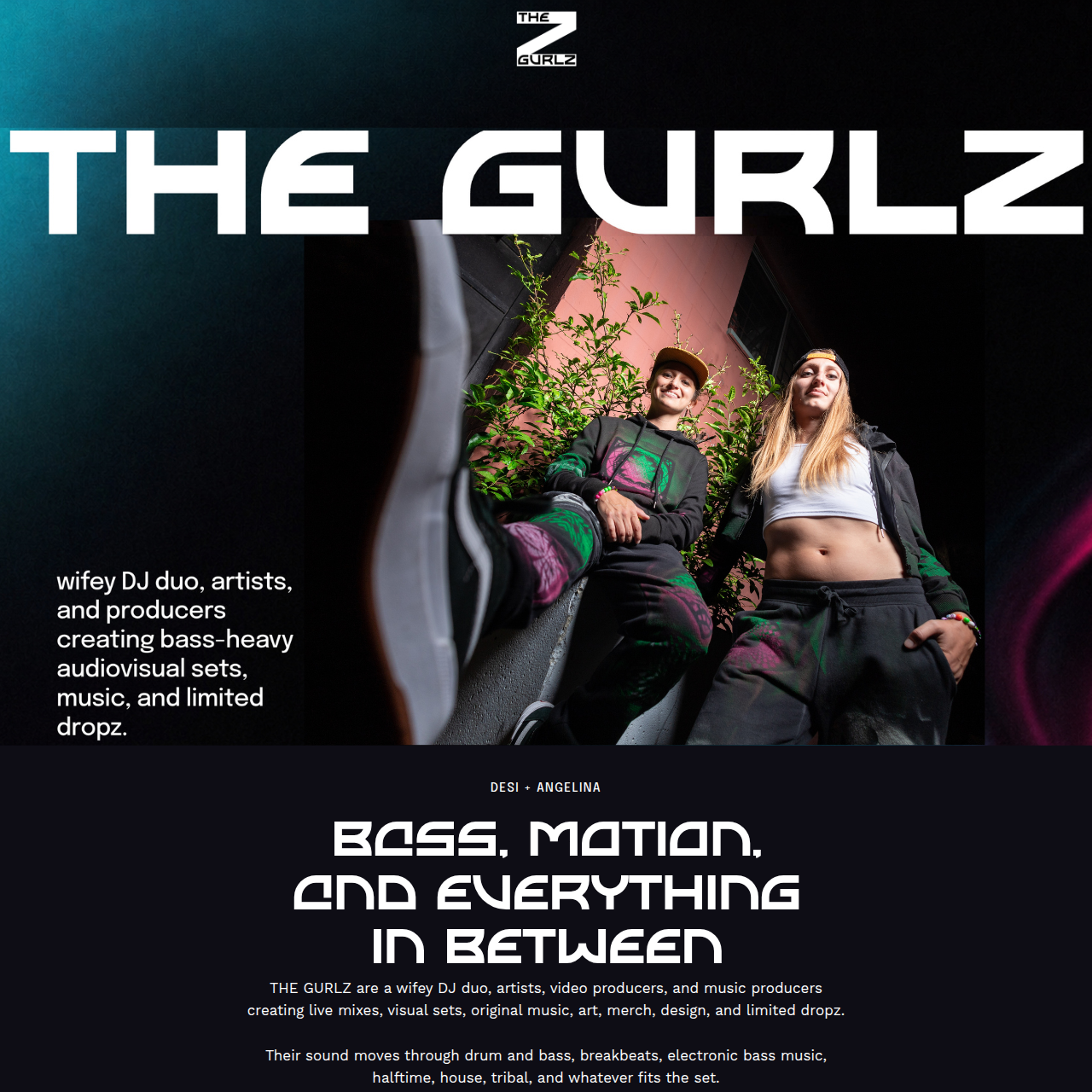
Desi and Angelina film, mix, and edit everything in-house. The visuals come from the location. The music is mixed live. If you are a dancer or movement artist looking for bass-heavy mixes that are built with tempo and groove in mind, their music shop is the place to start. Every release is produced with the dancefloor in mind, from the sub-bass up.
IG: @thegurlzmusic, main social for behind-the-scenes and exclusive content
TikTok: @thegurlzofficial
Youtube: @TheGurlzOfficial
SoundCloud: https://soundcloud.com/thegurlz
www.thegurlzofficial.com
FAQ
What are the best bass tempos for dancing?
The best bass tempos for dancing depend on your style, but the 118–135 BPM range offers the most sustainable energy for extended sessions. Dubstep at 140 BPM and drum and bass at 170–180 BPM suit dancers who want intensity and precision.
What BPM is drum and bass for dancers?
Drum and bass runs 170–180 BPM, but many dancers move to it at half that tempo by following the bass groove rather than the drums. This half-time approach makes the genre far more accessible for choreography and extended performance.
How does bass rhythm type affect dance movement?
Plucky bass suits staccato, fast movement while sustained bass suits smooth, rolling styles. Matching your movement texture to the bass texture makes the performance feel cohesive and connected to the music.
What tempo is dubstep for dancing?
Dubstep is technically 140 BPM, but its half-time groove means most dancers feel and move to it at 70 BPM. The bass drops and rhythmic emphasis fall on the half-time grid, which is where the natural movement cues live.
How do I avoid running out of energy dancing to fast bass music?
Use tempo zones as energy states. Recover during slower sections with larger, expressive movements, and push into faster zones like drum and bass for short bursts of intensity. Quick transitions at extreme tempos read as control, so commit to sharp movement decisions rather than gradual blending.


