
TL;DR:
- House music features a steady four-on-the-floor beat at 120–130 BPM, fostering a continuous groove. Bass music emphasizes aggressive bass and unpredictable rhythms, creating tension and physical impact. Their contrasting structures influence dancefloor energy and DJ mixing techniques.
House music is defined by a four-on-the-floor kick drum pattern locked to a steady 120–130 BPM grid, while bass music is a bass-driven umbrella term built around aggressive, modulated low-end and high-impact drops. The difference between house and bass music goes deeper than tempo or genre labels. It shapes how a track is built, how a DJ mixes it, and how a crowd responds to it. Understanding these distinctions makes you a sharper listener and gives you a real framework for navigating electronic music.
What are the defining rhythmic and tempo differences between house and bass music?
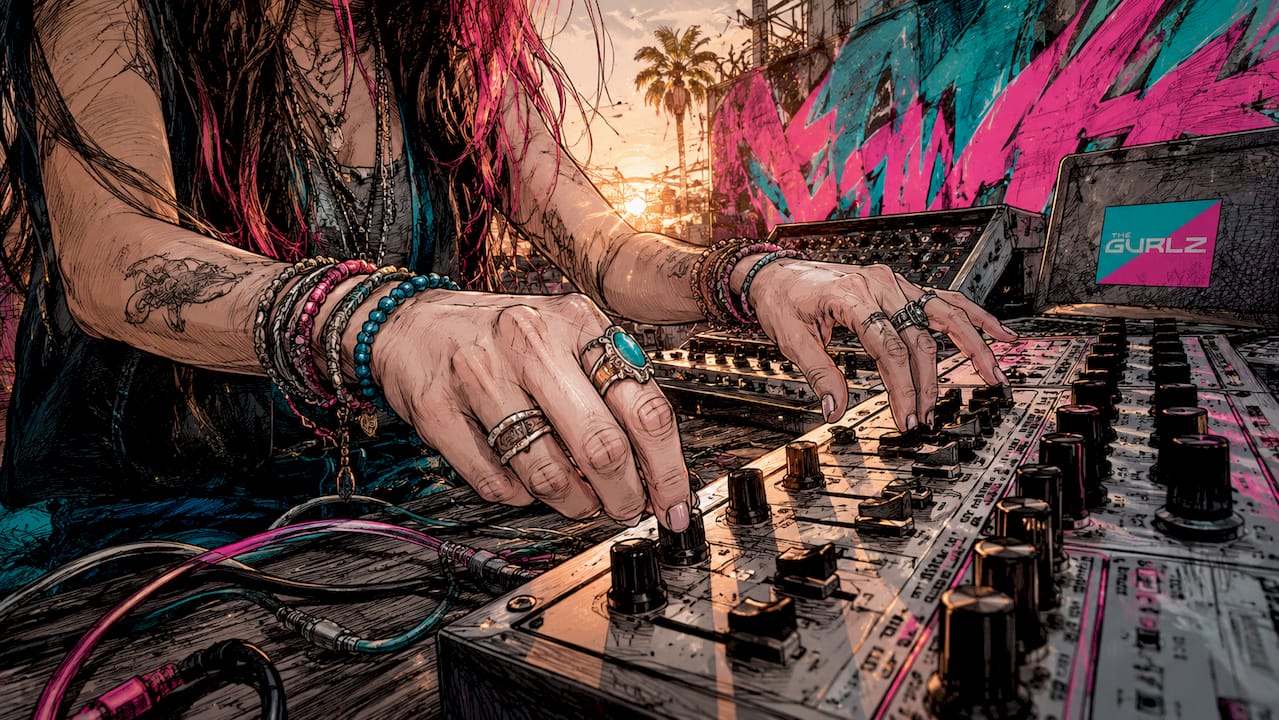
House music runs at 120–130 BPM with a kick drum landing on every beat of a 4/4 measure. That pattern is called four-on-the-floor, and it creates a hypnotic, locked-in pulse that keeps a dancefloor moving for hours without breaking the groove.
Bass music operates on a wider and less predictable rhythmic canvas. BPM ranges vary broadly, and the percussion often uses syncopation, swing, and half-time feels that push the beat off the grid. That unpredictability is intentional. It creates tension before a drop and releases it with physical force.
The rhythmic contrast between the two genres produces completely different dancefloor experiences:
- House: Steady 4/4 kick on every beat, consistent pulse, designed for continuous movement
- Bass music: Variable kick placement, syncopated snares, half-time patterns that build pressure
- House tempo: 120–130 BPM, tight and consistent
- Bass music tempo: Broader range, often with swing and rhythmic variation between sections
- Dancefloor effect (house): Trance-like, sustained groove that rewards patience
- Dancefloor effect (bass music): Peaks and valleys, crowd energy surges at drops
For a DJ, these rhythmic differences change everything about how tracks get mixed. House transitions flow naturally because the kick never moves. Bass music requires reading the crowd’s energy and timing drops precisely, since the rhythmic structure shifts between sections.
How does bass design and production technique differ in house and bass music?
House basslines are warm and rolling, often riding alongside the kick with sidechain compression that creates a pumping, breathing effect. The bass in house supports the groove. It does not compete with the kick. It moves with it.
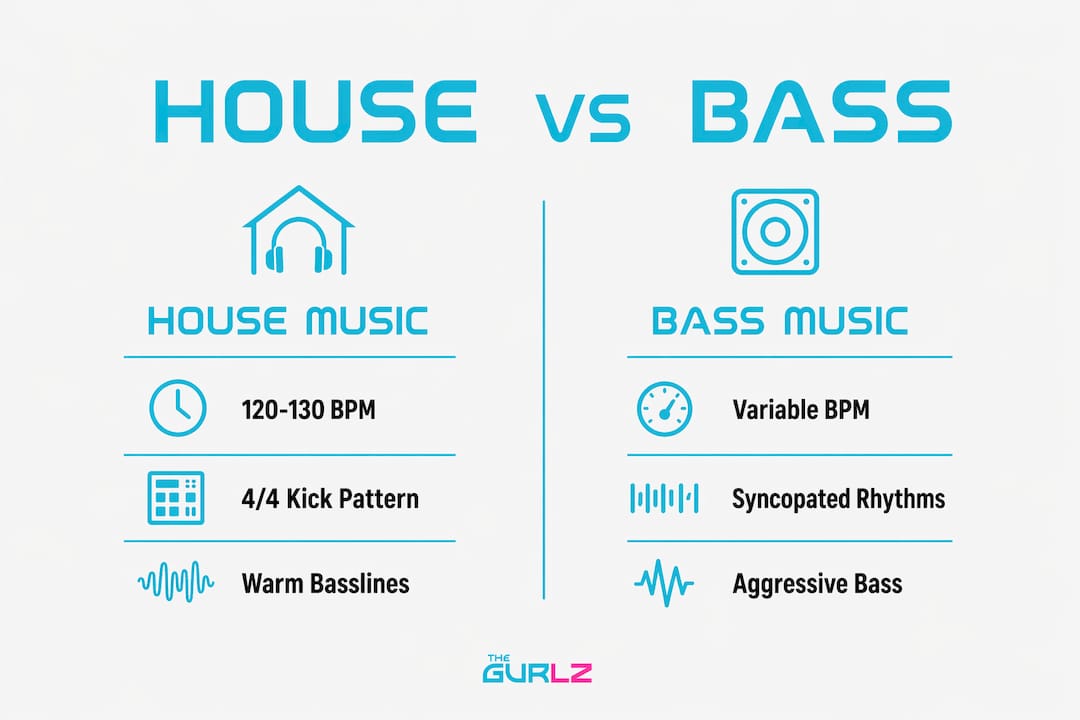
Bass music flips that relationship. The bass is the main event. Sound design in bass music prioritizes custom timbres like wobbles, growls, and synth modulation over melodic progression. The goal is texture and physical impact, not harmonic warmth.
| Feature | House music | Bass music |
|---|---|---|
| Bass character | Warm, rolling, melodic | Aggressive, distorted, modulated |
| Rhythmic role | Supports kick groove | Drives the drop and impact |
| Sound design | Minimal, repetitive | Complex, layered, textured |
| Arrangement focus | Continuous groove | Dynamic peaks and drops |
| Sidechain use | Creates pumping effect | Prevents frequency masking |
Sidechain compression is mandatory in bass-heavy tracks to prevent the kick and bass from clashing in the low-end. Without it, the mix turns muddy and the kick loses its punch. In house, sidechain creates a signature pumping feel. In bass music, it is a technical requirement for clarity at high volume.
Pro Tip: If you are producing bass music, set your sidechain attack fast enough to let the kick transient through before the bass ducks. A slow attack buries the kick and kills the impact of the drop.
House production gravitates toward groove and melodic repetition. A house track earns its energy through patience, layering elements slowly over several minutes. Bass music earns its energy through contrast, building tension and releasing it through drops that hit the body before they hit the brain.
What cultural and historical contexts shape the differences between house and bass music?
House music grew from the 1980s Chicago club scene, specifically from venues like the Warehouse and Music Box where DJs like Frankie Knuckles played for crowds that were largely Black and queer. The music was built for community. The four-on-the-floor beat created a shared trance that held a room together across hours of dancing.
Bass music traces its lineage through UK garage, dub sound-system culture, and dubstep, all of which prioritized raw physical impact over social warmth. Sound systems in Jamaica and later in the UK were built to move air and bodies. That philosophy carried into bass music’s production values: the louder and heavier the low-end, the more powerful the experience.
The cultural contrast shows up clearly in how events feel:
- House events: Intimate, inclusive, groove-focused, often club-based with a communal atmosphere
- Bass music events: High-energy, festival-scale, crowd peaks at drops, physical sub-bass as the central experience
- House crowd energy: Sustained, trance-like movement across the full set
- Bass crowd energy: Explosive at drops, building anticipation between them
House promotes social inclusivity and trance-like dance, while bass music emphasizes bass weight and physicality. These are not just sonic differences. They reflect different ideas about what music is for.
THE GURLZ pull from both traditions. Their sets move through house, drum and bass, breakbeats, and electronic bass music, reading the location and the crowd to decide what fits. That cultural fluency is what makes their immersive audiovisual sets feel different from a standard genre-locked performance.
How do house and bass music influence live DJ sets and dancefloor dynamics?
House music suits long-form, continuous mixing because its steady groove and consistent BPM make transitions predictable and smooth. A skilled house DJ can hold a room for three hours without a single jarring moment. The energy builds slowly, and the crowd stays locked in.
Bass music creates peaks. The arrangement is built around drops, and those drops are the moments a crowd remembers. A bass DJ’s job is to manage tension, build anticipation, and time the release so the drop lands with maximum impact. That requires a different kind of crowd reading than house mixing demands.
THE GURLZ blend both approaches in their location-based DJ sets. Their set at Sunset Cliffs, Bass & Breakz, moved through bass-heavy textures with the Pacific as a backdrop. House in the Wild brought groove-driven energy into open-air settings where the visuals and the music shaped each other in real time.
For DJs navigating transitions between house and bass styles, a practical sequence works well:
- Establish the house groove first. Lock the crowd into the four-on-the-floor pulse before introducing bass-heavy elements.
- Use a hybrid track as a bridge. Bass house, running at 124–128 BPM, shares the house kick structure but carries bass music’s aggressive low-end. It eases the transition without a jarring tempo shift.
- Read the room before the drop. Bass music drops only work when the crowd is already engaged. If energy is low, hold the groove longer.
- Return to house to reset. After a bass-heavy peak, a warm house track lets the crowd breathe and prepares them for the next build.
Pro Tip: When mixing house into bass music, match the kick placement first, then let the bass character shift. The crowd feels the rhythm before they hear the texture.
What are the main subgenres and hybrid styles bridging house and bass music?
Bass house is the clearest example of a genre that refuses to choose sides. It emerged in the early 2010s with a four-on-the-floor structure running at 124–128 BPM, borrowing house music’s rhythmic foundation and layering it with dubstep-influenced, aggressive bass design. The result is a genre that works in both house-oriented clubs and bass-heavy festival contexts.
Bass house functions as a transition tool for DJs moving between styles. Its shared kick structure with house makes beatmatching straightforward, while its bass character satisfies crowds expecting impact and texture.
| Subgenre | BPM range | Core characteristic |
|---|---|---|
| Deep house | 120–125 | Warm, soulful basslines, minimal arrangement |
| Tech house | 124–130 | Percussive groove, minimal melodic content |
| Bass house | 124–128 | Four-on-the-floor kick with aggressive bass drops |
| UK garage | 130–135 | Swung rhythms, vocal chops, rolling bass |
| Dubstep | 138–142 | Half-time feel, heavy wobble bass, wide dynamic range |
THE GURLZ work across this full spectrum. Their sound moves through original bass electronic music, breakbeats, halftime, and house, often within a single set. That range is not a lack of focus. It is a deliberate choice to follow the energy of the location and the moment rather than stay locked inside one genre’s rules.
Understanding these subgenres gives you a map for the electronic music world. Each one sits at a different point between house’s groove and bass music’s impact. Knowing where they land helps you understand why a set feels the way it does.
Key Takeaways
House music and bass music differ most fundamentally in rhythmic structure and bass design: house builds sustained groove through a steady four-on-the-floor beat, while bass music prioritizes aggressive low-end and high-impact drops.
| Point | Details |
|---|---|
| Rhythmic structure | House locks to a 4/4 kick at 120–130 BPM; bass music uses syncopation and half-time patterns. |
| Bass character | House basslines are warm and rolling; bass music uses distorted, modulated textures. |
| Arrangement purpose | House sustains continuous groove; bass music builds tension and releases it through drops. |
| Cultural roots | House grew from inclusive Chicago club culture; bass music draws from UK sound-system physicality. |
| Hybrid bridge | Bass house combines house’s four-on-the-floor kick with aggressive bass design at 124–128 BPM. |
What THE GURLZ hear when the genres collide
Playing both house and bass music in the same set teaches you something that reading about them never will. The crowd tells you which one they need before they know it themselves.
House holds people. It creates a shared body rhythm that feels almost involuntary after a few minutes. When a room locks into a house groove, the energy is quiet but deep. Bass music breaks that open. A well-timed drop after a house groove hits differently than a drop in a pure bass set. The contrast is the point.
What makes THE GURLZ’s sets work is that the visuals follow the same logic. When the music shifts from warm house to heavy bass, the edit shifts with it. Color, texture, and cut speed all respond to the music. The visual world around the set is not decoration. It is part of the same conversation the music is having with the crowd.
The genre lines are getting less rigid every year. Bass house proved that the four-on-the-floor and aggressive bass design are not opposites. They are tools. The most interesting sets in 2026 are the ones that treat them that way, moving between groove and impact without apology. That is exactly what Desi and Angelina build every time they set up somewhere new.
— THE GURLZ OFFICIAL
THE GURLZ live sets: house, bass, and everything between
THE GURLZ produce every set themselves. Filmed, mixed, and edited by Desi and Angelina, each release is a full audiovisual experience built around the location and the music.
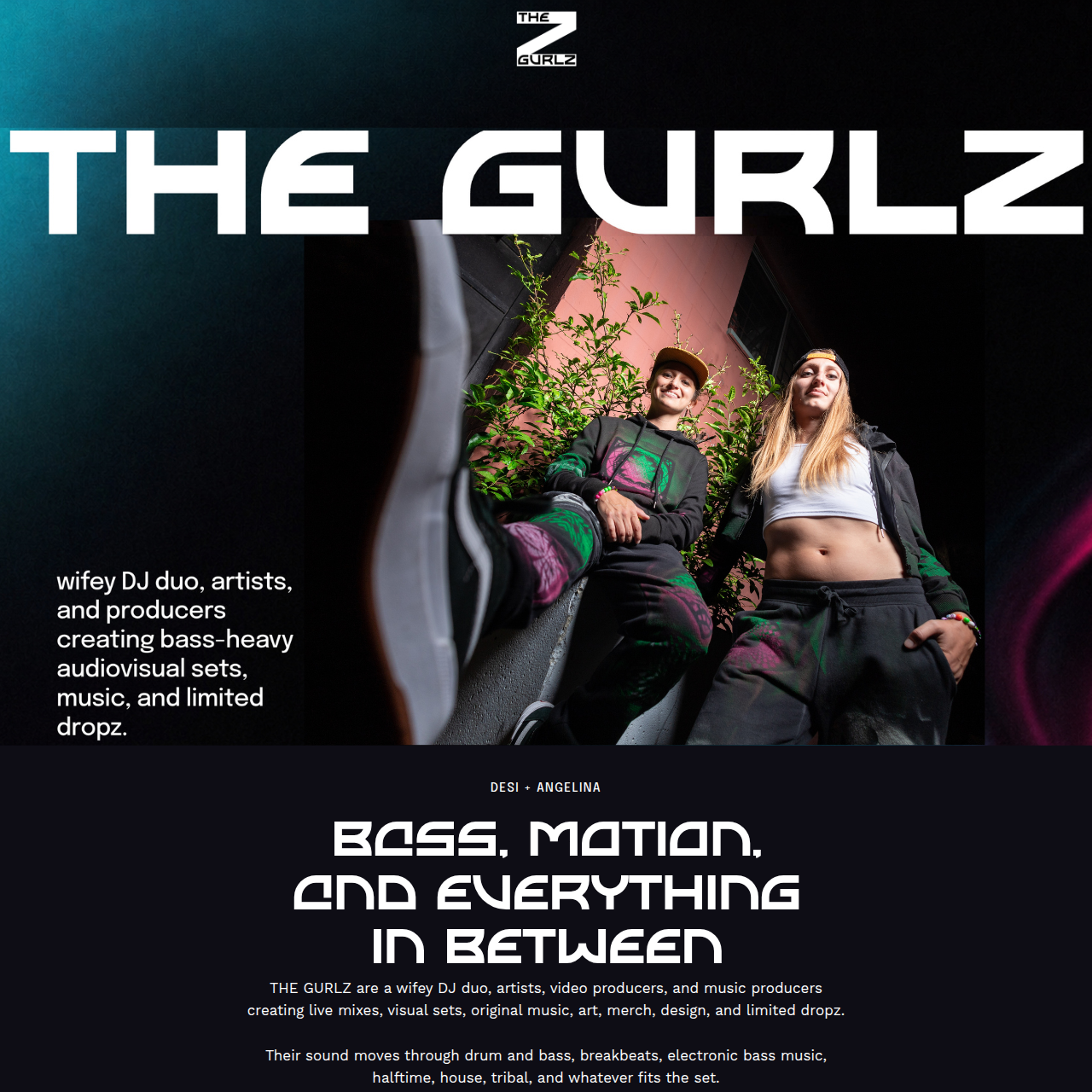
Bass & Breakz at Sunset Cliffs was where the format started. House in the Wild continued it with groove-driven energy in open-air settings. Both sets move between house and bass music in real time, letting the location and the crowd shape what comes next. Watch the full audiovisual sets to hear how house and bass music sound when they share the same space. More sets are already in motion, and original music from their studio is coming soon.
IG: @thegurlzmusic, main social for behind-the-scenes and exclusive content
TikTok: @thegurlzofficial
Youtube: @TheGurlzOfficial
SoundCloud: https://soundcloud.com/thegurlz
www.thegurlzofficial.com
FAQ
What is the main difference between house and bass music?
House music is defined by a steady four-on-the-floor kick at 120–130 BPM and warm, rolling basslines designed for continuous groove. Bass music prioritizes aggressive, modulated bass design and high-impact drops over sustained rhythm.
What BPM does bass music typically run at?
Bass music covers a broader BPM range than house and frequently uses syncopated or half-time rhythms. House music sits consistently at 120–130 BPM with a locked 4/4 kick pattern.
What is bass house and how does it relate to both genres?
Bass house runs at 124–128 BPM and combines house music’s four-on-the-floor kick structure with the aggressive, distorted bass design borrowed from dubstep and UK garage. It functions as a hybrid genre that works in both club and festival contexts.
How does sidechain compression work differently in house vs. bass music?
In house music, sidechain compression between the kick and bass creates a signature pumping feel. In bass music, it is a technical requirement to prevent frequency masking and preserve kick drum punch at high volumes.
Why do house and bass music feel so different at live events?
House creates a trance-like, inclusive atmosphere built for sustained communal dancing. Bass music drives crowd energy through peaks and drops, producing explosive physical reactions that are common in festival and rave settings.
Recommended
- How to Find Original Bass Electronic Music – ☀︎THE GURLZ ☽ – WIFEY DJ DUO / ARTISTS / PRODUCERS
- ☀︎THE GURLZ ☽ – WIFEY DJ DUO / ARTISTS / PRODUCERS – DNB • BASS • HALFTIME • HOUSE • BREAKBEATS • TRIBAL
- Women DJs Breaking Bass Music Barriers: Who to Know – ☀︎THE GURLZ ☽ – WIFEY DJ DUO / ARTISTS / PRODUCERS
- Bass Music Tempos for Dancers: The Complete BPM Guide – ☀︎THE GURLZ ☽ – WIFEY DJ DUO / ARTISTS / PRODUCERS


