
Original bass electronic music is defined as any electronically produced track where sub-bass and mid-bass frequencies drive the composition, rhythm, and emotional impact. This is not background music. You feel it in your chest before you consciously hear it. Platforms like Beatport, SoundCloud, and 1001tracklists are the primary places to find original bass electronic music right now, each serving a different kind of listener. Producers like Noisia and Skrillex built careers on this sound, and a new generation of artists is pushing it further every month. If you want tracks with real low-end weight and production finesse, you need to know where to look and what to listen for.
What is original bass electronic music and how is it characterized?
Electronic bass music is a production-first genre where the bass frequency range, from 20Hz to 120Hz, is the central compositional element. Bass music centers the low-frequency spectrum at rhythms typically running at 70–75 BPM or 140 BPM, with sub-bass and modulated mid-bass as the defining sonic features. That BPM range is not arbitrary. It maps almost exactly to the range where rhythm and physical sensation overlap in the human body.
The genre splits into two frequency layers that work together. Sub-bass sits below 60Hz and creates the physical pressure you feel in your chest and feet. Mid-bass lives from roughly 60Hz to 250Hz and carries the melodic and harmonic character of the sound. Sub-bass frequencies below 60Hz stimulate the vestibular system, which is why bass music feels immersive rather than just heard. That physical response is not a side effect. It is the point.
Three synthesis types define the sound design vocabulary of this genre:
-
Sub-bass: A pure sine or triangle wave tuned to the root note of the track, providing foundational low-end weight.
-
Reese bass: Detuned and aggressive waveforms that create harmonic tension, foundational in drum and bass. Noisia built much of their catalog on this technique.
-
Wobble bass: A modulated filter applied to a mid-bass tone, most associated with UK dubstep and later American bass music.
The production philosophy treats bass and space as primary compositional elements, a principle rooted in Jamaican dub that extended into UK electronic scenes and eventually global bass culture. Miami Bass, UK dubstep, drum and bass, and halftime all share this DNA while expressing it differently. Knowing which regional variant you prefer sharpens your search considerably.
Pro Tip: Tuning your sub-bass to the root note or a perfect fifth of the track key prevents dissonance in the sub-frequency range. When evaluating tracks, listen for whether the bass feels locked to the melody or fighting it.
Where to discover original bass electronic music online
The best platforms for finding original bass tracks are not all the same tool. Each one serves a different discovery need.
| Platform | Specialty | Cost | Key Feature |
|---|---|---|---|
| Beatport | High-fidelity originals | Paid per track | Filter by BPM, key, sub-genre tag |
| SoundCloud | Emerging artists, free mixes | Free / Pro | Follow labels and artists directly |
| 1001tracklists | DJ set identification | Free | Trace tracks from live sets |
| Spotify | Curated playlists | Subscription | Bass-specific playlist ecosystems |
| Mixcloud | Full DJ sets | Free / Select | Legal long-form mixes |
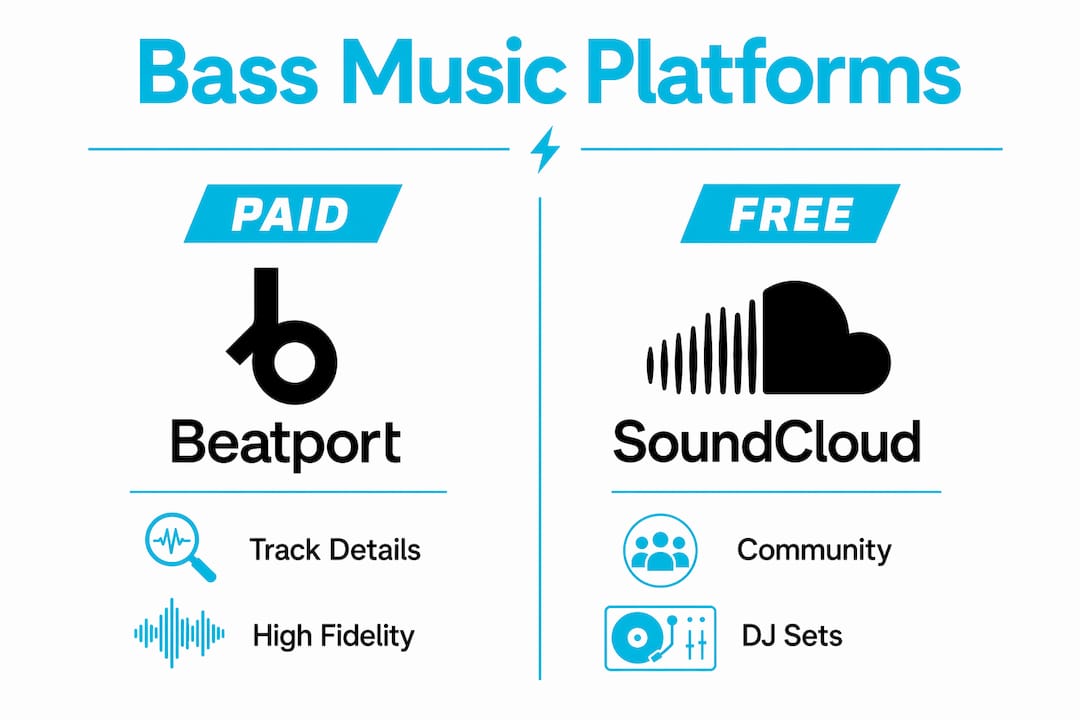
Beatport categorizes original bass tracks by BPM, key mapping, and sub-genre tags including Drum and Bass, Bass/Club, and Breaks. That filtering system is the fastest way to narrow 10,000 tracks down to 20 that match your exact energy. Use it before you browse.
SoundCloud is where emerging producers post work before it hits any store. Following labels like Metalheadz, Shogun Audio, or smaller independent imprints gives you access to tracks weeks or months before they appear elsewhere. The comment sections on SoundCloud tracks are also genuinely useful. Fans frequently tag the exact sample source or production technique in the thread.
1001tracklists connects artists to original bass tracks through detailed setlists and sound links. If you heard something in a DJ set and cannot identify it, 1001tracklists is the fastest path to the track name and release info. This is especially useful for unreleased IDs that producers play live before official release.
-
Search Beatport using genre tags: Drum and Bass, Halftime, Bass/Club, Breaks, Jungle.
-
On SoundCloud, follow artist accounts and label channels directly rather than relying on the algorithm.
-
Use 1001tracklists to reverse-engineer tracks from DJ sets you love.
-
Build Spotify playlists around specific BPM ranges to maintain energy consistency for DJ prep.
-
Check Bandcamp for independent releases that never appear on major platforms.
Pro Tip: On Beatport, sort results by “Release Date” within a sub-genre tag to catch new bass music releases the week they drop. Most original tracks from emerging artists surface here before they reach streaming platforms.
How to identify quality original bass music productions
A well-produced bass track has specific technical markers you can train yourself to hear. The most reliable indicator is how the sub-bass behaves in the low end. Mono summing sub-bass below 80–100Hz is essential to avoid phase cancellation on club sound systems. Stereo low frequencies disappear on large systems. A producer who understands this sums their sub to mono, and you can hear the difference as a focused, centered weight rather than a diffuse rumble.
Sidechain compression between the kick drum and sub-bass keeps mixes punchy and clear. When this is done well, the kick and bass take turns occupying the low end without masking each other. When it is done poorly, the mix sounds muddy and the kick loses its punch. This is one of the fastest ways to separate a professional production from an amateur one.
Quick indicators of an original quality bass track:
-
Focused sub-bass: The low end feels centered and controlled, not wide or diffuse.
-
Kick and bass separation: Each element has its own space in the frequency range.
-
Tuned bass notes: The bass melody follows the track key without clashing against the harmonic content.
-
Dynamic range: The track breathes. Drops feel heavier because the build-up creates contrast.
-
Modulation variety: The bass sound changes over the course of the track rather than staying static.
Metadata and release information also matter. Tracks released on established labels like Metalheadz, Hospital Records, or Noisia’s Vision Recordings carry production standards built into the label’s reputation. Independent releases on Bandcamp often include detailed production notes from the artist. Reading those notes tells you exactly what tools and techniques were used, which helps you evaluate authenticity and originality.
How to expand your discovery via DJ sets, artist communities, and emerging scenes
DJ sets are the single best source for hearing original bass tracks before they are officially released. Producers routinely play unreleased IDs in live sets to test crowd response. Following the right artists on SoundCloud, Mixcloud, and YouTube puts those sets in your feed the day they go up.
-
Follow producers on SoundCloud. Artists like Noisia, Ivy Lab, and Thegurlzofficial post mixes and original tracks directly to their profiles. Turning on notifications means you hear new material the moment it drops.
-
Search YouTube for location-based sets. Audio-visual DJ sets filmed at specific locations, like the format Thegurlzofficial pioneered with Bass & Breakz at Sunset Cliffs, combine original bass music with visual context that deepens the listening experience.
-
Use Mixcloud for full legal mixes. Mixcloud hosts long-form DJ sets that Spotify and YouTube often remove. Search by genre tag (drum and bass, halftime, breaks) to find curated sets from artists you do not yet know.
-
Join Reddit communities. Subreddits like r/DnB, r/EDM, and r/halftime are active discovery hubs. Members regularly post new releases, label spotlights, and set recommendations with direct links.
-
Use AI-powered sonic search tools. Sonic search tools find music based on audio input or reference tracks by comparing sonic features with AI. Drop a URL or audio file from a track you love and get a list of sonically similar originals.
-
Attend festivals and events. Bass music festivals like Outlook, Shambhala, and Movement feature stages dedicated to original bass sounds. The festival circuit is where emerging artists get their first major exposure.
Distinguishing between UK-centric bass music and regional variants like Miami Bass helps you tailor your searches for the style you actually want. UK bass leans toward sparse, sub-heavy arrangements. Miami Bass prioritizes rhythm and vocal energy. Knowing the difference saves hours of searching through tracks that are technically correct but wrong for your taste.
Bass music is designed to be inhabited rather than merely heard, with rhythmic production techniques that sync to listeners’ heartbeats. That insight changes how you evaluate a set or a track. The question is not just whether it sounds good. The question is whether it moves you.
Key Takeaways
Finding original bass electronic music requires combining platform knowledge, production literacy, and active community engagement to access the best tracks before they go mainstream.
| Point | Details |
|---|---|
| Define your sub-genre first | Knowing whether you want UK bass, halftime, or drum and bass sharpens every search. |
| Use Beatport’s filters | Filter by BPM, key, and sub-genre tag to find high-fidelity originals fast. |
| Evaluate production quality | Listen for mono sub-bass, sidechain clarity, and tuned bass notes as quality markers. |
| Follow artists and labels | SoundCloud and 1001tracklists surface unreleased tracks weeks before official release. |
| Engage with DJ sets | Audio-visual sets from artists like Thegurlzofficial reveal original tracks in full context. |
Why Original Bass Music Is Better When It Feels Alive
A lot of people find bass music through playlists, genre tags, or whatever the algorithm decides to push next.
That works sometimes.
But the tracks and sets that stay with people usually have something else going on. They do not just sound heavy. They feel alive.
Original bass electronic music is not only about volume or low-end weight. It is about movement, tension, release, space, and the way the music hits the body before the brain catches up.
That is why live DJ sets, visual mixes, and audio-visual experiences matter. They give the music more context. They show where the energy is coming from.
THE GURLZ are part of that lane.
Desi and Angelina (aka THE GURLZ) move through drum and bass, breakbeats, electronic bass music, halftime, house, tribal, and whatever fits the set. Their sets are produced, filmed, mixed, and edited by THE GURLZ. The music is mixed live. The visuals come from the location, the time spent there, and the world around the set.
Bass & Breakz at Sunset Cliffs started their immersive audio-visual DJ set format. House in the Wild continues it.
That format gives bass music another way to be experienced. Not just heard. Watched. Felt. Remembered.
For listeners searching for original bass electronic music, THE GURLZ offer something different from a standard playlist or a camera-on-the-DJ-booth video. Their sets bring together bass, movement, color, location, live mixing, and visual energy in one release.
It is music you can watch and feel.
Original bass music and artists worth your time
THE GURLZ, a wifey DJ duo, artists, video producers, and music producers creating bass-heavy audio-visual DJ sets, live mixes, art, merch, design, and limited dropz.
Their sound moves through drum and bass, breakbeats, electronic bass music, halftime, house, trap, tribal, and whatever fits the set.
Each release is produced, filmed, mixed, and edited by THE GURLZ. The music is mixed live, and the visuals come from the location, the time spent there, and the world around the set.
Bass & Breakz at Sunset Cliffs started their immersive audio-visual DJ set format.
House in the Wild continues it with a different kind of energy, moving through house music while still carrying the visual world THE GURLZ are known for.
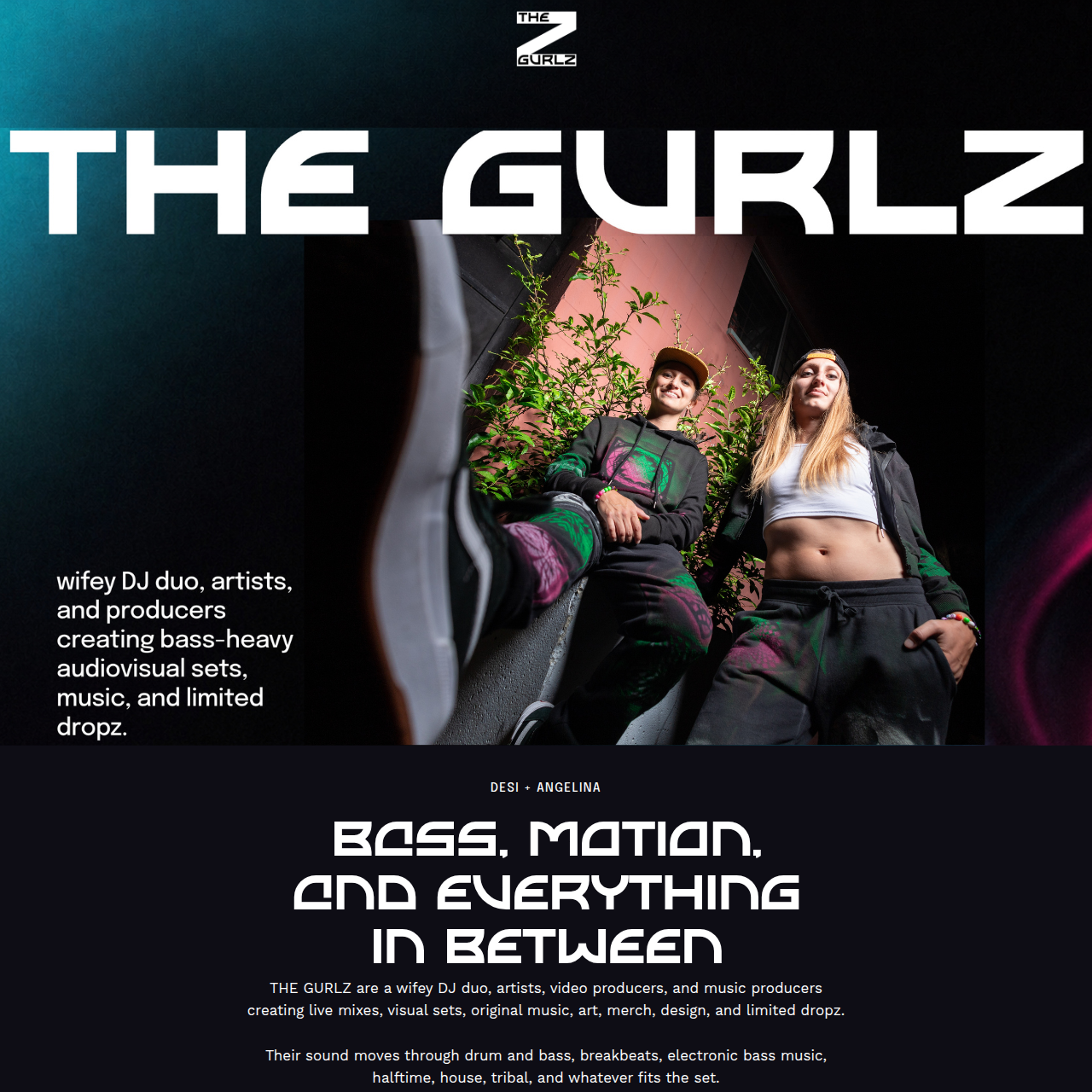
Original music is coming soon from their studio, along with more audio-visual setz already in motion.
For listeners looking for bass-heavy electronic music, live DJ sets, visual mixes, and something beyond a standard playlist, THE GURLZ are worth watching now.
Watch the latest drop on YouTube, listen on SoundCloud, and follow THE GURLZ on Instagram for behind-the-scenes and exclusive content.
FAQ
What is electronic bass music?
Electronic bass music is a genre where sub-bass and mid-bass frequencies, spanning 20Hz to 120Hz, function as the primary compositional elements rather than supporting roles. Rhythms typically run at 70–75 BPM or 140 BPM depending on the sub-genre.
Where is the best place to discover original bass tracks online?
Beatport is the best platform for high-fidelity originals filtered by BPM, key, and sub-genre. SoundCloud and 1001tracklists are the best sources for unreleased tracks and DJ set identification.
What makes a bass electronic track sound original and well-produced?
A well-produced bass track features mono-summed sub-bass below 80–100Hz, proper sidechain compression between the kick and sub-bass, and bass notes tuned to the track key. These three elements separate professional productions from amateur ones.
How do I use DJ sets to find new bass music releases?
Follow producers on SoundCloud and Mixcloud, then use 1001tracklists to identify unreleased tracks played in those sets. Producers regularly debut original IDs in live mixes before official release.
Can AI tools help me find original bass music similar to tracks I already love?
AI-powered sonic search tools allow you to drop an audio file or URL and receive a list of sonically similar tracks based on frequency and rhythm analysis. This method surfaces original bass music that genre tags and playlists typically miss.
