
TL;DR:
- Underground electronic music emphasizes community, authenticity, and experimentation over commercial success.
- It originated from marginalized communities in the 1980s and is defined by its function on the dancefloor.
Underground electronic music is defined as the collection of niche scenes, sounds, and communities that resist mainstream commercialization by prioritizing cultural authenticity, experimental sound design, and collective experience over profit. This is not a genre. It is a value system expressed through sound. From Detroit techno’s Black working-class roots to warehouse parties in Berlin and bass-heavy sets filmed at Sunset Cliffs, the underground has always operated outside the algorithm. This article breaks down what underground electronic music actually is, where it came from, which subgenres matter, and why it still shapes everything you hear on the main stage.
What is underground electronic music, and how did it start?
Underground electronic music originated in marginalized communities, specifically Black, queer, and working-class scenes in American cities during the 1980s. Detroit techno and Chicago house were not born in studios with label budgets. They were built in basements, on homemade equipment, and shared through pirate radio and white-label records pressed in small runs. The music reflected the lives of the people making it: disciplined, raw, and free from commercial expectation.
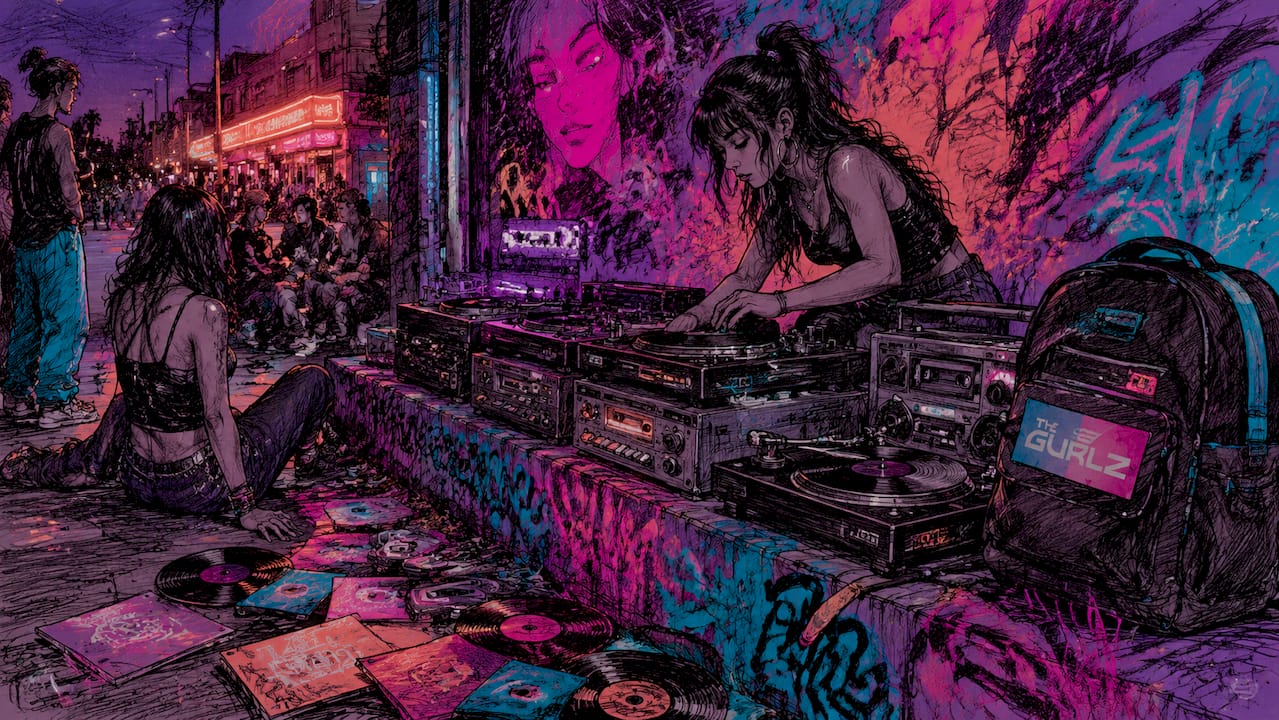
The DIY ecosystem was the infrastructure. Pirate radio stations broadcast sets without licenses. Warehouse parties created spaces outside of licensed venues and mainstream gatekeepers. White-label records, pressed without artist names or label branding, circulated purely on sonic merit. This decentralization was not accidental. It was a defense against co-option.
Mass media diluted the term “techno” in the 1990s by applying it as an umbrella label for hardcore, trance, and other genres that had little connection to Detroit’s original sound. That dilution obscured the cultural and racial origins of the music and made it easier for commercial interests to absorb and rebrand it. The underground responded by going deeper, not louder.
Electronic music today spans from mainstream EDM and pop to underground club cultures, experimental soundscapes, and ambient scenes. That range exists because the underground kept pushing while the mainstream kept packaging. The two have always been in tension, and that tension is what keeps the underground alive.
Which genres define the underground electronic music scene?
Underground electronic music genres are best understood as overlapping neighborhoods, not fixed boxes. Genre labels in underground electronic music are fluid. Artists regularly blend techno, EBM, and industrial in a single release without contradiction. The goal is function and feeling, not category compliance.
Core subgenres and what they do
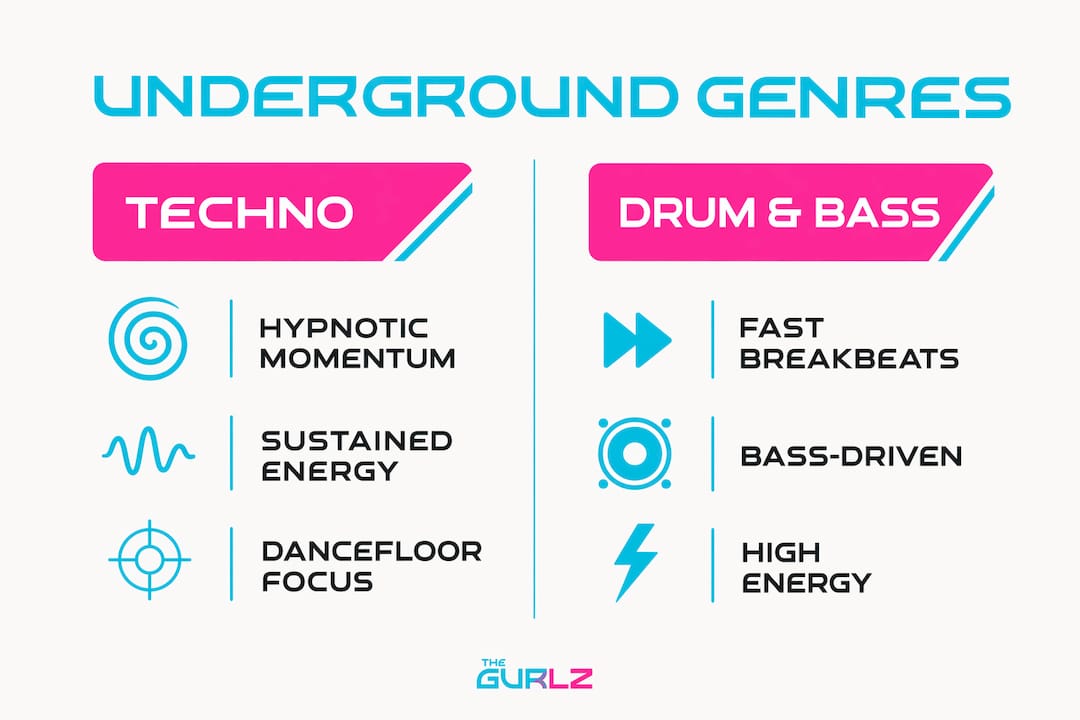
- Techno operates through disciplined momentum. Repetitive kick patterns, minimal melodic variation, and long builds create a hypnotic state on the dancefloor. Detroit techno carries a specific industrial weight that separates it from its European descendants.
- House commands the dancefloor through groove and warmth. Four-on-the-floor kick drums, soulful vocal samples, and chord progressions rooted in gospel and funk give house its emotional pull.
- EBM (Electronic Body Music) is a mode of attack built on militant rhythms, sequenced basslines, and barked vocals. It unifies punk, industrial, and electronic elements into a physically demanding dance style. EBM does not invite you. It commands you.
- Industrial club uses harsh textures, distorted percussion, and confrontational sound design to create a deliberately uncomfortable dancefloor experience.
- Electro draws from hip-hop’s drum machine roots, specifically the Roland TR-808, and favors mechanical rhythms and robotic vocal processing.
- Breakbeat and its descendants, including drum and bass and halftime, build energy through syncopated rhythms that break the four-on-the-floor grid entirely.
- Ambient functions as the counterpoint. It prioritizes texture and atmosphere over rhythm, often used to open or close a night rather than drive the peak hour.
Identifying underground music is most effective when you focus on its function and energy on the dancefloor rather than its label. That framework cuts through genre confusion faster than any taxonomy.
| Genre | Core trait | Dancefloor function |
|---|---|---|
| Techno | Disciplined, hypnotic momentum | Sustained trance state |
| House | Groove, warmth, soul | Emotional connection and movement |
| EBM | Militant rhythms, barked vocals | Physical command and aggression |
| Industrial club | Harsh textures, distortion | Confrontation and intensity |
| Breakbeat / DnB | Syncopated, off-grid rhythms | Energy surge and physical release |
| Ambient | Texture over rhythm | Emotional decompression |
Pro Tip: When you enter a new subgenre, listen to three full DJ sets before forming an opinion. One track rarely shows you what the genre actually does to a room over time.
How does underground culture stay authentic in a digital world?
The underground electronic music economy thrives by rejecting polished branding and measuring success through emotional resonance and community connection rather than commercial formulas. That is not idealism. It is a functioning business model that a growing number of listeners actively seek out over algorithm-driven content.
Independent labels are the backbone of this model. They sign artists for the long term and allow sonic identity to develop without pressure from radio formulas or streaming metrics. Underground labels focus on long-term artist development, giving producers the space to refine their sound across years, not quarters. That patience produces artists with depth, and depth builds loyal audiences.
Live event culture reinforces what digital platforms cannot fully replicate. Intimate clubs and warehouse parties prioritize sound system quality, darkness, and anonymity. The focus stays on the music and the collective experience in the room. There is no photo pit, no meet-and-greet, and often no set time posted in advance. That deliberate friction filters the audience toward people who are genuinely there for the music.
Digital platforms have expanded the underground’s reach without necessarily compromising its values. Artists release on Bandcamp to maintain pricing control and direct fan relationships. SoundCloud remains a primary platform for long-form mixes that streaming services cannot accommodate. The tools changed. The ethos did not.
Pro Tip: Follow artists on Bandcamp and buy directly when you can. That single purchase does more for an underground artist’s ability to keep making music than hundreds of streams.
Artists who want to find original bass electronic music outside the mainstream algorithm have more options now than at any point in the scene’s history. The underground is not hiding. It is just not advertising.
What is the cultural significance of underground electronic music?
The underground dancefloor functions as what theorists call a Temporary Autonomous Zone. The dancefloor historically operates as a space that erases performer spectacle and prioritizes collective experience through decentralized, community-driven ecosystems. There is no stage in the traditional sense. There is no performer looking down at an audience. The DJ is part of the room, not above it.
That structural choice carries real cultural weight. Underground music resists the star system that mainstream entertainment depends on. The music leads. The person playing it serves the room. This is why underground scenes have historically been safer spaces for queer communities, people of color, and anyone who felt excluded from mainstream entertainment’s narrow definitions of who belongs on a stage or a dancefloor.
The underground also functions as the music industry’s research and development department. Genres that now fill festival main stages, including house, techno, and drum and bass, were underground sounds first. The mainstream absorbs what the underground creates, often without credit. That pattern has repeated for four decades and shows no sign of stopping.
Women DJs breaking bass music barriers represent one of the most visible shifts in the scene’s current moment. The underground has always made space for artists who did not fit the mainstream mold, and that tradition continues to produce the most interesting work happening in electronic music right now.
THE GURLZ, the wifey DJ duo of Desi and Angelina, embody this ethos directly. Their audio-visual DJ sets are produced, filmed, mixed, and edited entirely by them. The music is mixed live. The visuals come from the location itself. Bass & Breakz at Sunset Cliffs and House in the Wild are not performances in the traditional sense. They are documents of a place and a sound existing together at a specific moment. That is underground thinking applied to a new format.
Key Takeaways
Underground electronic music is a value system built on community, authenticity, and resistance to commercialization, expressed through sound and sustained by independent ecosystems.
| Point | Details |
|---|---|
| Origins in marginalized communities | Detroit techno and Chicago house emerged from Black, queer, and working-class scenes in the 1980s. |
| Genre as function, not label | Understand underground subgenres by what they do on the dancefloor, not by strict category rules. |
| Authenticity over algorithm | Underground labels prioritize long-term artist development and emotional resonance over commercial metrics. |
| Dancefloor as collective space | The underground dancefloor erases performer spectacle and centers the shared experience of everyone in the room. |
| THE GURLZ as a living example | Desi and Angelina produce immersive audio-visual sets that apply underground values to a location-based format. |
What the underground taught us about making music that matters
The most common mistake people make when approaching underground electronic music is treating it like a genre to collect rather than a culture to participate in. You can build a perfect playlist of techno and house and still miss the point entirely. The point is the room. The point is the people in it. The sound is the vehicle, not the destination.
Desi and Angelina built THE GURLZ around that understanding. Every set they film and mix is tied to a specific place and time. Sunset Cliffs at dusk sounds different from a wild location mid-afternoon, and the music they play reflects that. The visuals are not decoration. They are part of the set. That approach comes directly from underground thinking: the experience is the work, and the work belongs to the moment it was made in.
The underground will keep producing the sounds that matter most. It always has. The question is whether you are paying attention before those sounds get repackaged and sold back to you at a festival.
— THE GURLZ OFFICIAL
THE GURLZ: audio-visual sets rooted in underground sound
THE GURLZ bring underground electronic music to life through immersive audio-visual DJ sets filmed at real locations, mixed live, and edited entirely in-house.
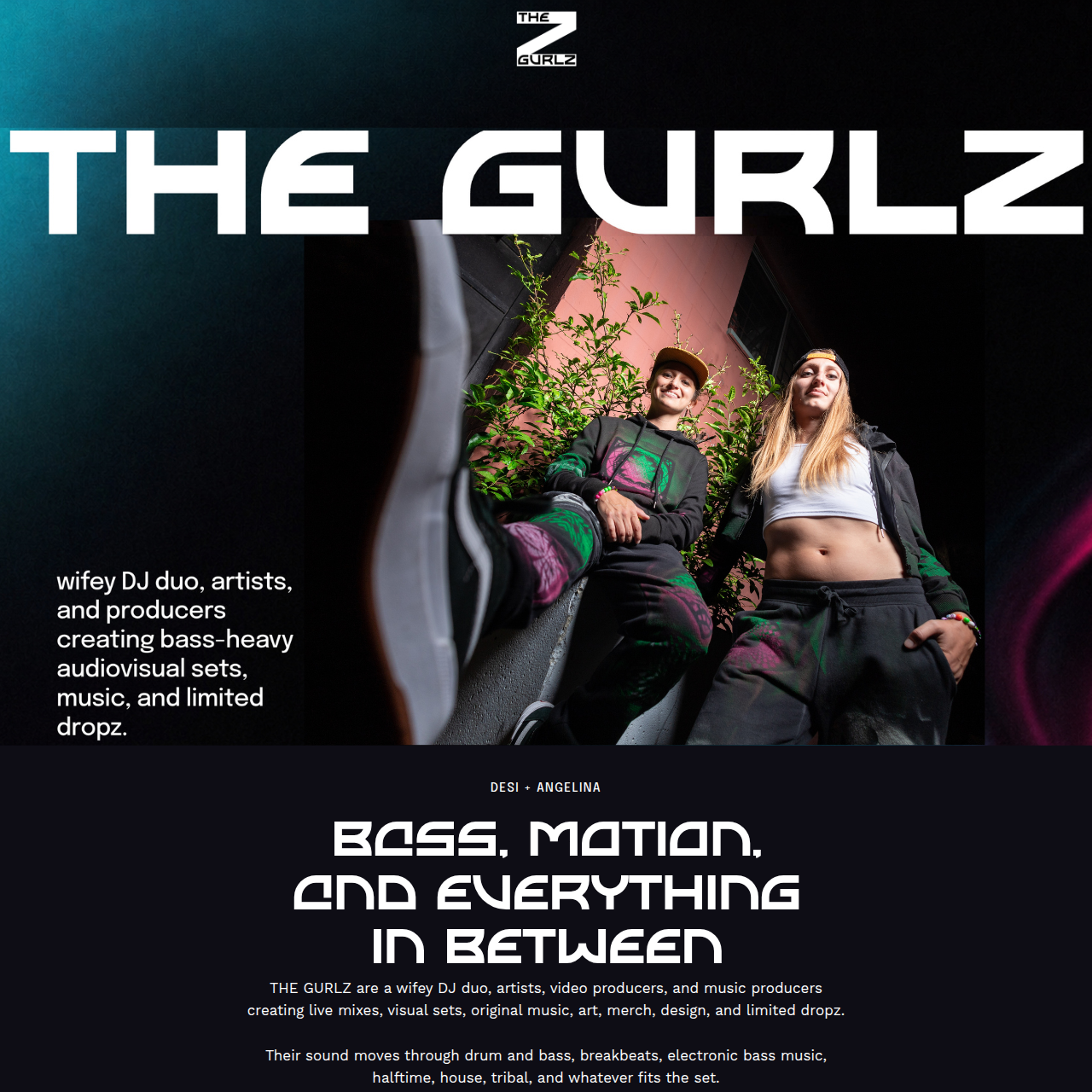
Bass & Breakz at Sunset Cliffs was where the format started. House in the Wild pushed it further. Every release is a new location, a new mix, and a new visual world built around the music. Desi and Angelina move through drum and bass, breakbeats, halftime, house, and tribal, pulling from the full range of underground sound without chasing trends. Original music from their studio is coming soon. Explore THE GURLZ sets and sound and see what underground music looks like when it is also something you can watch.
IG: @thegurlzmusic, main social for behind-the-scenes and exclusive content
TikTok: @thegurlzofficial
Youtube: @TheGurlzOfficial
SoundCloud: https://soundcloud.com/thegurlz
www.thegurlzofficial.com
FAQ
What is underground electronic music?
Underground electronic music is a collection of scenes and sounds that prioritize community, authenticity, and experimentation over commercial success. It originated in Black, queer, and working-class communities in American cities during the 1980s.
How is underground electronic music different from mainstream EDM?
Underground electronic music measures success through emotional resonance and community connection rather than chart performance or streaming numbers. Mainstream EDM is built around broad appeal, festival spectacle, and algorithmic visibility.
What are the main underground electronic music genres?
The core underground genres include techno, house, EBM, industrial club, electro, breakbeat, drum and bass, and ambient. Each genre is best understood by its function on the dancefloor rather than by strict sonic boundaries.
Why did the term “techno” lose its original meaning?
Mass media in the 1990s used “techno” as a catch-all label for genres like hardcore and trance, which obscured the music’s origins in Black, working-class Detroit communities. That dilution separated the term from its cultural and sonic roots.
How can I find underground electronic music today?
Bandcamp, SoundCloud, and independent record stores remain the most direct paths to underground music. Following artists and labels directly, rather than relying on streaming algorithms, gives you access to the full depth of what the scene produces.
Recommended
- How to Find Original Bass Electronic Music – ☀︎THE GURLZ ☽ – WIFEY DJ DUO / ARTISTS / PRODUCERS
- Women DJs Breaking Bass Music Barriers: Who to Know – ☀︎THE GURLZ ☽ – WIFEY DJ DUO / ARTISTS / PRODUCERS
- Inside THE GURLZ Audio-Visual DJ Sets | Live Mixes + Visual Sets – ☀︎THE GURLZ ☽ – WIFEY DJ DUO / ARTISTS / PRODUCERS
- What Is a Visual Set in Music? Your Complete Guide – ☀︎THE GURLZ ☽ – WIFEY DJ DUO / ARTISTS / PRODUCERS


