
TL;DR:
- Peak-time DJ music focuses on high-energy tracks with tempos between 130 and 145 BPM designed to energize the dancefloor. These tracks feature a powerful 4/4 kick, driving basslines, and tension-building elements to create a physical and emotional response. DJs typically dedicate 30 to 60 minutes to this phase, using deliberate track selection and pauses to build and release energy across genres like techno, house, and drum and bass.
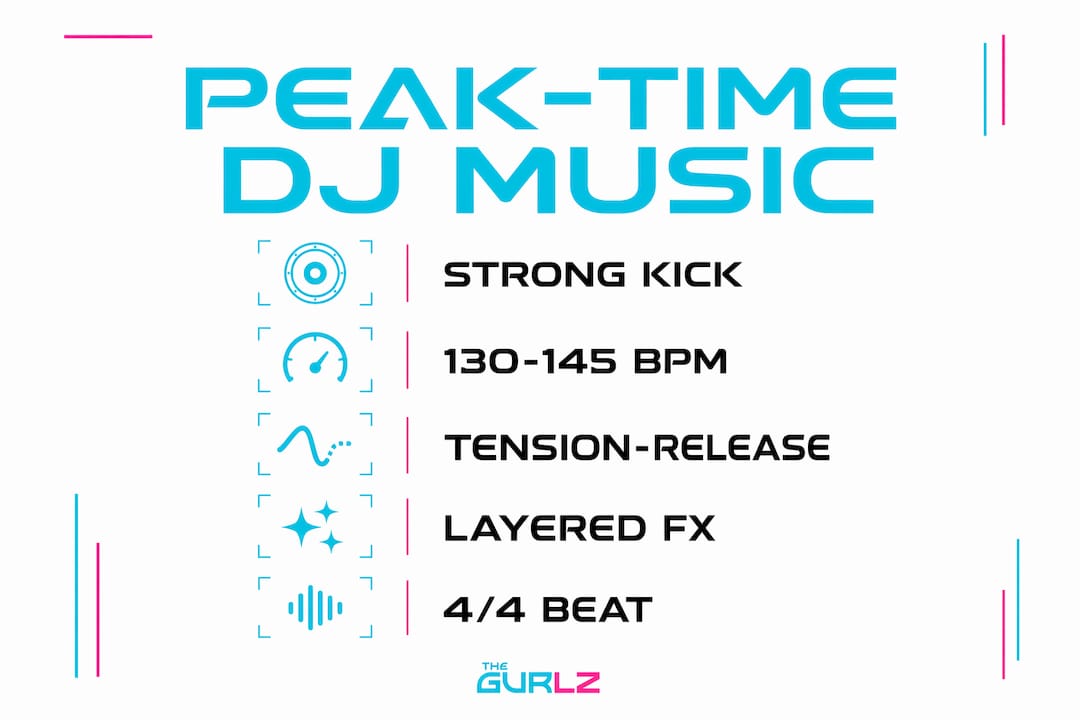
Peak-time DJ music is defined as the high-energy segment of a DJ set where tracks are engineered to ignite the dancefloor with powerful beats and driving rhythms. Industry standard places peak-time techno between 130 and 145 BPM, creating a tempo range that sustains intense dancing without burning the crowd out. These tracks are built around a powerful 4/4 kick drum, driving basslines, and minimal but precise tension-building elements. The result is music that feels physical. It hits the chest, locks the body into rhythm, and holds a crowd in a shared state of energy for the best hours of the night.
What is peak-time DJ music and how is it defined?
Peak-time DJ music is less a genre and more a functional collection of tracks designed to maximize energy and emotional connection at the critical moments of a set. That distinction matters. You will find peak-time tracks across techno, house, drum and bass, and breakbeats. What unites them is purpose, not label.
The defining characteristic is the 4/4 kick drum. It acts as the physical heartbeat of the music, landing on every beat with enough weight to be felt through a sound system. Around that kick, producers layer driving basslines, tension-building synth elements, and carefully placed drops. The goal is to keep the dancefloor locked in without giving too much away too soon.
Tempo is the other anchor. Peak-time tracks typically run between 128 and 145 BPM, depending on the genre. That range sits in a sweet spot where the body can sustain movement and the mind stays engaged. Go below it and the energy drops. Go above it and fatigue sets in faster than the feeling does.
What sonic elements define peak-time tracks?
The production of peak-time music is built for large sound systems. Every element is engineered to cut through noise, carry across a festival mainstage, and still feel tight in a club. That balance requires specific choices at the production level.
Key sonic features of peak-time tracks include:
- 4/4 kick drum: Heavy, punchy, and consistent. It anchors the entire track and drives physical response.
- Mono-focused sub-bass: Mono sub-bass ensures stability on large systems and mixes cleanly without phase issues.
- Sidechain compression: Creates the pumping, breathing feel that pulls the body into the groove.
- Extended intros and outros: Engineered for seamless mixing, giving DJs space to layer tracks without losing energy.
- Minimal but effective tension builders: Filtered sweeps, rising synths, and stripped-back breakdowns that make the drop land harder.
- Loudness with clarity: Peak-time music is raw but highly produced, balancing punch and definition so it dominates a room without turning to mud.
Pro Tip: When listening to peak-time tracks, pay attention to what gets removed before the drop, not just what gets added. The tension comes from subtraction.
The layered FX and sidechain work are what separate peak-time production from simply “loud music.” A track can be heavy and still feel controlled. That control is what makes it mixable and what keeps a crowd locked in for an extended run.
How do DJs structure a peak-time set?
Peak-time is not a single moment. Effective DJs dedicate 30–60 minutes to the peak phase of a set, using that window to build, sustain, and shape the crowd’s energy. Understanding that structure changes how you experience a set as a listener.
Here is how skilled DJs approach the peak-time phase:
- Build gradually. Playing the hardest tracks too early kills the arc. The best sets earn the peak through a slow, deliberate climb.
- Use anchor tracks. These are the high-impact records that hold the crowd’s attention and signal that the set has arrived at its most intense point.
- Create valleys. Deliberate dips in energy between peak surges prevent burnout and make the next surge hit harder. Relentless intensity becomes noise.
- Read the room. The crowd tells you when to push and when to pull back. A skilled DJ listens and adjusts in real time.
- Categorize by phase, not just BPM. Organizing a music library by set phase rather than genre alone lets DJs make faster, smarter decisions during a live set.
Pro Tip: If you want to understand peak-time structure, watch a DJ’s track selection in the 20 minutes before the crowd hits its highest energy. That build is the real craft.
The tension and release cycle is what makes peak-time music feel emotional, not just loud. A well-placed valley makes the next peak feel like a release. That is the difference between a set that exhausts and one that elevates.
What genres and artists define peak-time music?
Peak-time music spans several genres, each with its own character. The BPM in dance music and the kick pattern shift between them, but the function stays the same.

| Genre | Typical BPM | Character |
|---|---|---|
| Peak-time techno | 130–145 | Hard, hypnotic, industrial-edged |
| Hard techno | 140–150 | More aggressive, distorted kicks |
| Peak-time house | 128–135 | Groove-driven, melodic tension |
| Drum and bass | 170–180 | Fast, syncopated, bass-heavy |
| Breakbeats | 120–140 | Chopped rhythms, raw energy |
Artists like Charlotte de Witte, Amelie Lens, and Adam Beyer define the peak-time techno sound at the festival and club level. Their sets are built around sustained intensity, hypnotic repetition, and precise track selection. Each of them treats the peak-time phase as a narrative, not a playlist.
Hard techno sits above peak-time techno in aggression and tempo. Deep house sits below it in intensity. Peak-time music occupies the space where the body is fully committed and the mind is still engaged. That is the zone these artists live in.
How does peak-time music create a collective crowd experience?
Peak-time music works on the body before it works on the mind. The BPM range and rhythm patterns of peak-time tracks sync group movement in a way that slower or more complex music cannot. When hundreds of people share the same pulse, something shifts in the room.
The crowd experience during peak time is shaped by several forces:
- Rhythmic entrainment: The body naturally syncs to a consistent beat. A powerful 4/4 kick at 135 BPM pulls people into the same physical rhythm without conscious effort.
- Emotional build and release: The tension-and-drop structure creates cathartic moments. The crowd feels the release together, which deepens the shared experience.
- Sonic clarity: Peak-time tracks are engineered to cut through loud environments. That clarity means the music reaches every corner of the room with the same impact.
- The DJ as conductor: Skilled DJs read the crowd and shape the collective mood through track selection and transitions. They are not just playing music. They are managing energy.
The collective experience is why peak-time music matters beyond the tracks themselves. A great record played at the wrong moment lands flat. The same record placed at the right moment in a set becomes a memory. That is the power of understanding peak-time structure.
Key Takeaways
Peak-time DJ music is a functional, production-driven tool that uses BPM, kick weight, and tension-release structure to sustain maximum crowd energy during the most intense phase of a DJ set.
| Point | Details |
|---|---|
| BPM defines the zone | Peak-time tracks run between 130 and 145 BPM, sustaining energy without causing fatigue. |
| Production is purpose-built | Mono sub-bass, sidechain compression, and extended intros make tracks mixable and physically impactful. |
| Peak time is a phase, not a moment | Skilled DJs sustain 30–60 minutes of peak energy using anchor tracks and deliberate valleys. |
| Genre is secondary to function | Techno, house, drum and bass, and breakbeats all produce peak-time tracks. The function unites them. |
| Crowd experience is collective | Rhythmic entrainment and tension-release cycles create shared emotional peaks across an entire room. |
THE GURLZ on what peak-time energy actually feels like
Peak-time is not about playing the hardest record in your bag. Desi and Angelina have mixed enough sets to know that the moment you think you have peaked, you have probably already lost the crowd. The real skill is in the approach, not the arrival.
What THE GURLZ bring to peak-time music is a layer that most sets do not have: visuals that move with the energy. When the kick drops and the bassline locks in, the edit follows. The color shifts. The cut lands on the beat. The crowd is not just hearing the peak. They are watching it happen in real time.
Bass & Breakz at Sunset Cliffs was where that format took shape. The location, the light, the water, and the music were all one thing. That is what peak-time can be when the visuals are built to match it. House in the Wild pushed it further, into a different environment with a different energy. Each location-based set changes what peak-time feels like, because the world around the music becomes part of the music.
The honest truth about peak-time is that it requires patience. You cannot manufacture it. You build toward it, read the room, and let it arrive. When it does, everything else disappears.
— THE GURLZ OFFICIAL
THE GURLZ audio-visual sets: music you can watch and feel
THE GURLZ produce every set themselves. Desi and Angelina mix live, film on location, and edit the visuals to follow the music closely. The result is a full audio-visual DJ set where the energy of the music and the energy of the place become one thing.
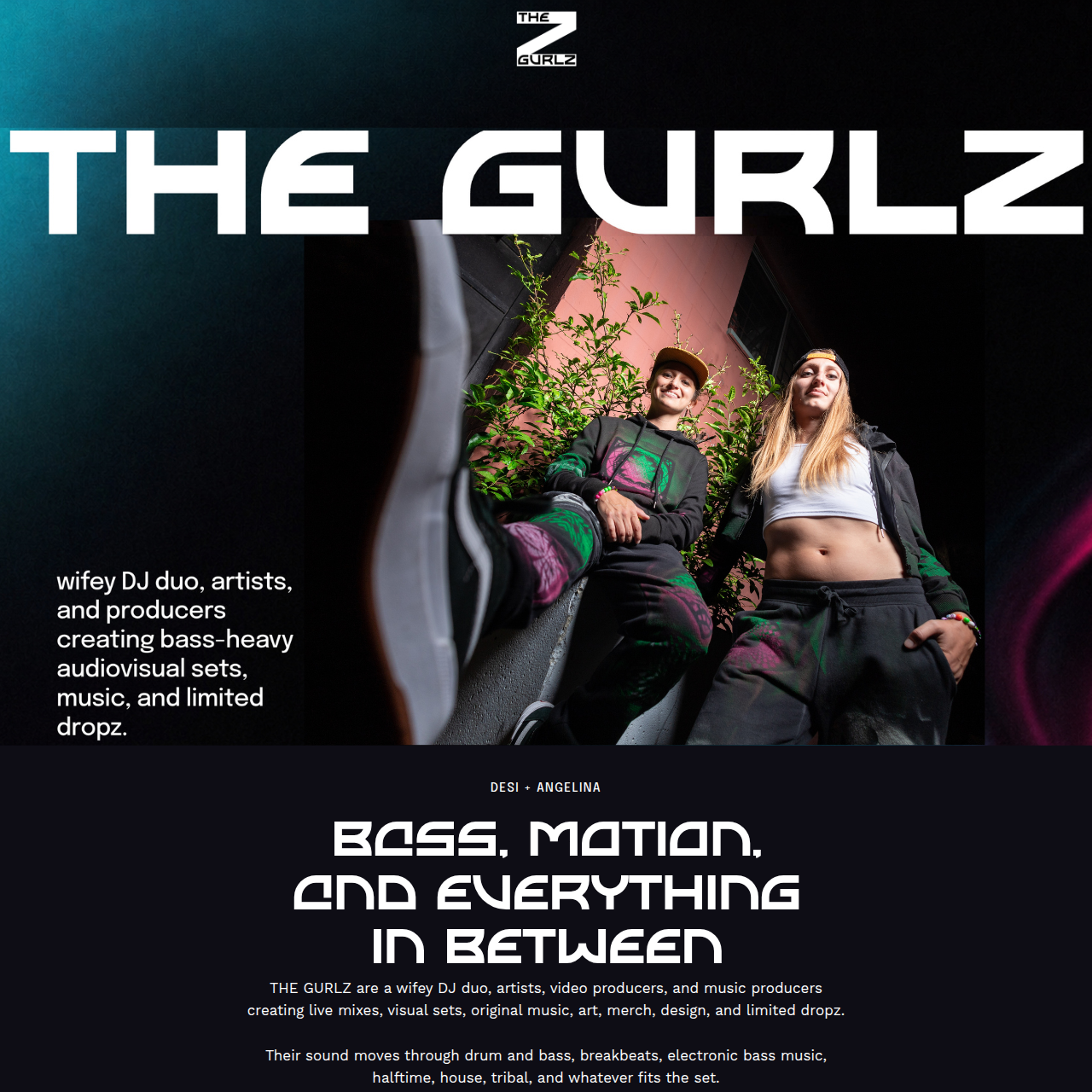
Their sound moves through drum and bass, breakbeats, halftime, house, and tribal. The sets are built to hit peak-time energy in environments that most DJs never play. Sunset cliffs. Wild locations. Places where the visuals are already there and the music has to match them. If you want to see what peak-time music looks like when it has a visual world around it, the best audiovisual DJ sets from THE GURLZ are the place to start.
FAQ
What is peak-time DJ music?
Peak-time DJ music is the high-energy phase of a DJ set, featuring tracks with powerful 4/4 kick drums, driving basslines, and tempos between 130 and 145 BPM, engineered to sustain maximum dancefloor energy.
What BPM is considered peak-time music?
Peak-time music typically runs between 130 and 145 BPM. That range sustains intense dancing while balancing groove and drive without pushing into fatigue territory.
What genres are common in a peak-time DJ set?
Peak-time techno, hard techno, peak-time house, drum and bass, and breakbeats all produce peak-time tracks. The genre varies, but the function is always the same: maximum crowd engagement.
How long does a peak-time set last?
Effective DJs dedicate 30–60 minutes to the peak phase of a set, using anchor tracks and deliberate energy valleys to sustain intensity without burning the crowd out.
What makes a track work for peak hours?
Peak-hour tracks are built with mono sub-bass, sidechain compression, extended intros and outros, and a powerful kick drum. These production choices make them mixable, loud, and physically impactful on large sound systems.
IG: @thegurlzmusic, main social for behind-the-scenes and exclusive content
TikTok: @thegurlzofficial
Youtube: @TheGurlzOfficial
SoundCloud: https://soundcloud.com/thegurlz
www.thegurlzofficial.com
Recommended
- MegaMenu – Home – ☀︎THE GURLZ ☽ – WIFEY DJ DUO / ARTISTS / PRODUCERS
- The Role of BPM in Dance Music: A Dancer’s Guide – ☀︎THE GURLZ ☽ – WIFEY DJ DUO / ARTISTS / PRODUCERS
- Examples of Location-Based DJ Sets Worth Watching – ☀︎THE GURLZ ☽ – WIFEY DJ DUO / ARTISTS / PRODUCERS
- Sidebar Main – ☀︎THE GURLZ ☽ – WIFEY DJ DUO / ARTISTS / PRODUCERS


