
TL;DR:
- Halftime is an electronic bass genre characterized by its 2:1 tempo relationship, creating a spacious and heavy groove at 65-75 BPM. It emphasizes atmospheric textures, long reverbs, and structural pauses, distinguishing it from more aggressive genres like dubstep and drum and bass. DJs and producers use halftime to bridge high-energy genres and craft immersive, patience-rewarding experiences.
Halftime is an electronic bass music genre defined by drum patterns that create a half-speed rhythmic feel while the track runs at a higher BPM. The actual tempo sits between 130–150 BPM, but the perceived groove lands at 65–75 BPM, producing a spacious, heavy pulse that feels nothing like its technical speed. This 2:1 ratio is the genre’s core identity. It is not a halftime show, not a sports break, and not a loose descriptor for slow electronic music. Halftime is a specific production style with its own rules, its own artists, and its own place in festival design.
What is the halftime music genre, and how does it work?
Halftime music is defined by one core mechanic: the 2:1 tempo relationship between the track’s actual BPM and the rhythmic feel the listener experiences. A track running at 140 BPM feels like 70 BPM. That gap is intentional. It creates weight and space that faster genres cannot replicate.
This is not the same as simply playing music slowly. The underlying tempo stays high. The drum pattern is what shifts. Kick drums and snares land at half the rate of the track’s grid, while the rest of the production moves at full speed. The result is a groove that feels heavy and deliberate, not sluggish.
Understanding this mechanic also explains why halftime sits so naturally alongside drum and bass, dubstep, and house in a DJ set. Drum and bass runs at 174 BPM. House runs near 87 BPM. Halftime at 140 BPM with a 70 BPM feel bridges those worlds. A skilled DJ can navigate BPM transitions between high-energy drum and bass and slower house music using halftime as the connective tissue.
Producers structure halftime tracks in 16 or 32-bar sections to give evolving pads and reverb tails room to breathe. Shorter phrase lengths would cut off the textures before they develop. This structural choice is not accidental. It is the production mindset that defines the genre’s spaciousness.
Pro Tip: When producing halftime, set your loop length to 32 bars before you place a single element. That constraint forces you to think in long arcs rather than quick drops, which is exactly the headspace the genre demands.
- Set your project BPM between 130 and 150.
- Place your kick and snare at half the grid rate to create the halftime feel.
- Build pads and textures that evolve across 16 or 32 bars, not 4 or 8.
- Leave space in the low end. Bass hits land harder when the mix around them is open.
- Use long reverb tails on percussion to fill the space without cluttering the frequency spectrum.
What makes halftime sound different from dubstep and drum and bass?
Halftime does not chase aggression. That is the clearest way to separate it from its neighbors. Dubstep leans into raw, distorted energy. Drum and bass drives relentlessly forward. Halftime pulls back and lets the space do the work.
The genre’s atmospheric pads and long reverb tails are not decorative. They are structural. They fill the gaps left by the slower drum pattern and give the track its mood. Textures evolve slowly across bars rather than snapping between sections. Listening to halftime requires patience. The impact builds.
Artists like Ivy Lab and Alix Perez are credited with defining this approach. Their tracks use controlled space and evolving sound design to create weight rather than volume. The bass hits harder because the mix around it is quiet. That restraint is the genre’s signature.
“Halftime’s heaviness comes from what is not there. The space between hits is as important as the hits themselves. Producers who understand that build tracks that feel physical without being loud.”
The sonic characteristics that separate halftime from related genres include:
- Slower perceived groove at 65–75 BPM despite a higher track tempo
- Long reverb and decay on drums and pads that sustain across multiple bars
- Evolving atmospheric textures that shift gradually rather than cutting abruptly
- Strategic low-end placement where bass hits land in open space for maximum impact
- Minimal high-frequency clutter, keeping the mix clean and the groove felt rather than heard
How does halftime function in festival design and live DJ sets?
Festival organizers treat halftime as a dedicated tempo zone, not just a genre option. The concept is called tempo architecture. Different stages or rooms are assigned different BPM ranges to manage crowd energy across the full event.
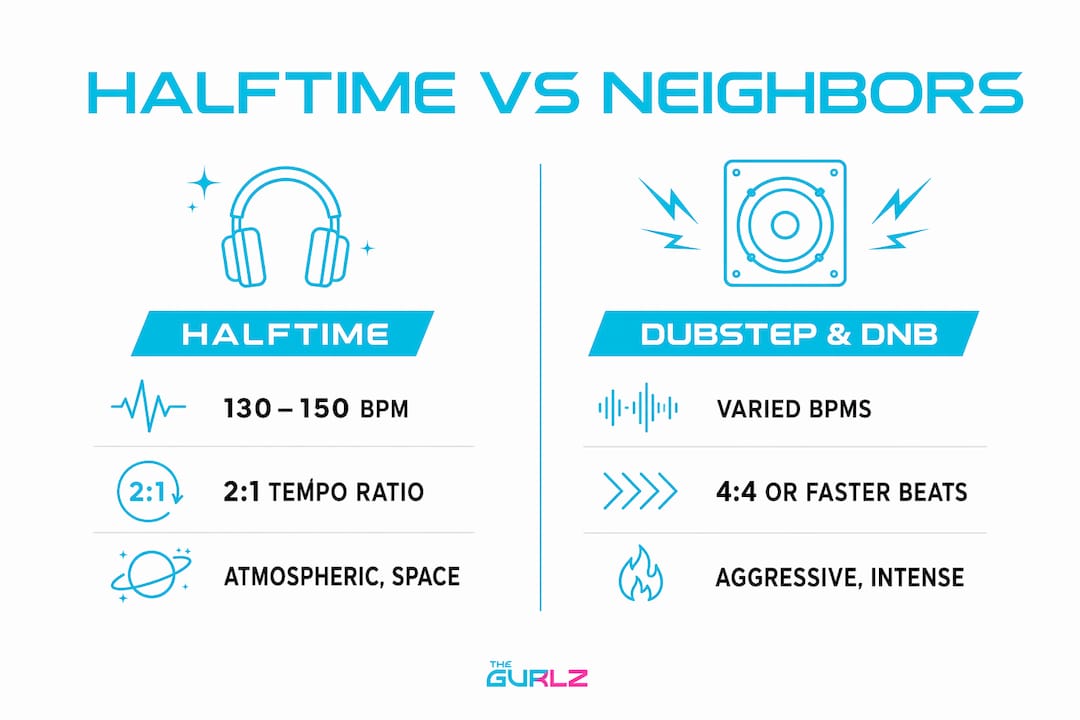
A halftime room sits at the slower, head-nodding end of the spectrum. A high-energy stage runs drum and bass or techno at 174 BPM or above. Separating these zones prevents sonic bleed, where the energy of one stage disrupts the vibe of another. Each space stays coherent. Each crowd gets the experience the music is designed to deliver.
| Festival zone | Typical BPM range | Crowd energy function |
|---|---|---|
| Halftime room | 130–150 BPM (felt at 65–75) | Recalibrates energy, head-nodding groove |
| Peak-time stage | 140–150 BPM full energy | Maximum intensity, crowd peaks |
| Drum and bass pen | 174 BPM | High-tempo, relentless drive |
| House room | 120–130 BPM | Sustained dancing, melodic focus |
The halftime room recalibrates crowd energy between high-tempo sets. Listeners who step in from a 174 BPM drum and bass stage feel the shift immediately. The body slows down. The mind focuses. That reset is intentional and valuable for a full-day or multi-day festival.
For DJs, the 2:1 tempo relationship is a practical mixing tool. A DJ moving from drum and bass into house can use a halftime track as a bridge. The math works cleanly. The transition feels natural rather than jarring. Understanding halftime as a concept, not just a genre, gives DJs a wider range of movement across a set. You can read more about BPM and dancefloor energy and how tempo choices shape the crowd experience.
Pro Tip: If you are DJing a multi-genre set and need to move between drum and bass and house, drop a halftime track at the pivot point. The crowd will feel the shift as intentional and musical, not like a mistake.
What are the most common misconceptions about halftime music?
The biggest source of confusion is the word itself. “Halftime” is polysemous, meaning it refers to multiple unrelated things depending on context. In sports, halftime is the break between game periods. In popular music, it is the title of a 1992 Nas song. In electronic music production, it is a specific rhythmic technique and genre classification. These meanings do not overlap.
Knowing which context applies matters for genre identification. A festival-goer searching for halftime music and landing on sports content or a hip-hop track is not finding what they are looking for. The electronic music definition is distinct and specific.
The second common misconception is that halftime and drumstep are the same genre. They are not.
- Halftime is a bass music genre with tracks running at 130–150 BPM and a perceived groove at half that speed. It prioritizes atmosphere and space.
- Drumstep is a drum and bass sub-genre that runs at 174 BPM and uses halftime drum patterns. The tempo is fixed at drum and bass speed. The halftime rhythm is a technique applied within that framework, not the genre itself.
- The distinction matters for classification because drumstep shares the rhythmic tool but not the sonic identity or tempo range of halftime.
- Confusing the two leads to mislabeled tracks, wrong room bookings, and audiences who show up expecting one experience and get another.
Halftime also gets confused with general “slow electronic music.” That framing misses the point. Halftime is not slow. Its track BPM is high. The groove is slow. That difference is the entire genre. Explore the full range of bass music styles to see how halftime fits within the broader electronic music spectrum.
Key Takeaways
Halftime music is defined by its 2:1 BPM ratio, where a track running at 130–150 BPM creates a perceived groove at 65–75 BPM, producing a spacious, heavy sound distinct from all other bass music genres.
| Point | Details |
|---|---|
| Core BPM mechanic | Tracks run at 130–150 BPM but feel like 65–75 BPM due to halftime drum placement. |
| Production structure | Use 16 or 32-bar phrases to let pads and reverb tails develop fully. |
| Festival function | Halftime rooms recalibrate crowd energy between high-tempo stages using tempo architecture. |
| DJ mixing tool | The 2:1 ratio lets DJs bridge drum and bass and house music without jarring transitions. |
| Genre identity | Halftime is not drumstep, not a sports break, and not simply slow electronic music. |
Halftime through THE GURLZ lens
Halftime is the genre that taught us to trust space. When Desi and Angelina first started weaving halftime grooves into their sets, the instinct was to fill every gap. That instinct is wrong. The groove lives in what you leave out.
THE GURLZ build their audio-visual DJ sets around the idea that music and visuals should move together. Halftime makes that possible in a way faster genres do not. The longer phrases give the edit room to breathe. The slower perceived tempo lets a visual moment land before the next one arrives. When the bass hits in a halftime track, the frame can hold still. That stillness is felt.
For producers new to the genre, the hardest lesson is patience. Halftime rewards focused listening over aggressive energy. Build your track in 32-bar arcs. Let the pads evolve. Do not rush the drop. The impact comes from restraint, not volume. If you are mixing halftime into a multi-genre set, learn the math. Know your BPMs. The 2:1 relationship is not a trick. It is a tool, and it works every time.
The genre is not for everyone. It asks something of the listener. That is exactly why it matters.
— THE GURLZ OFFICIAL
THE GURLZ and the halftime experience
THE GURLZ bring halftime into a format most people have never seen before: a fully produced audio-visual DJ set, filmed and edited in the same location where the music is mixed live.
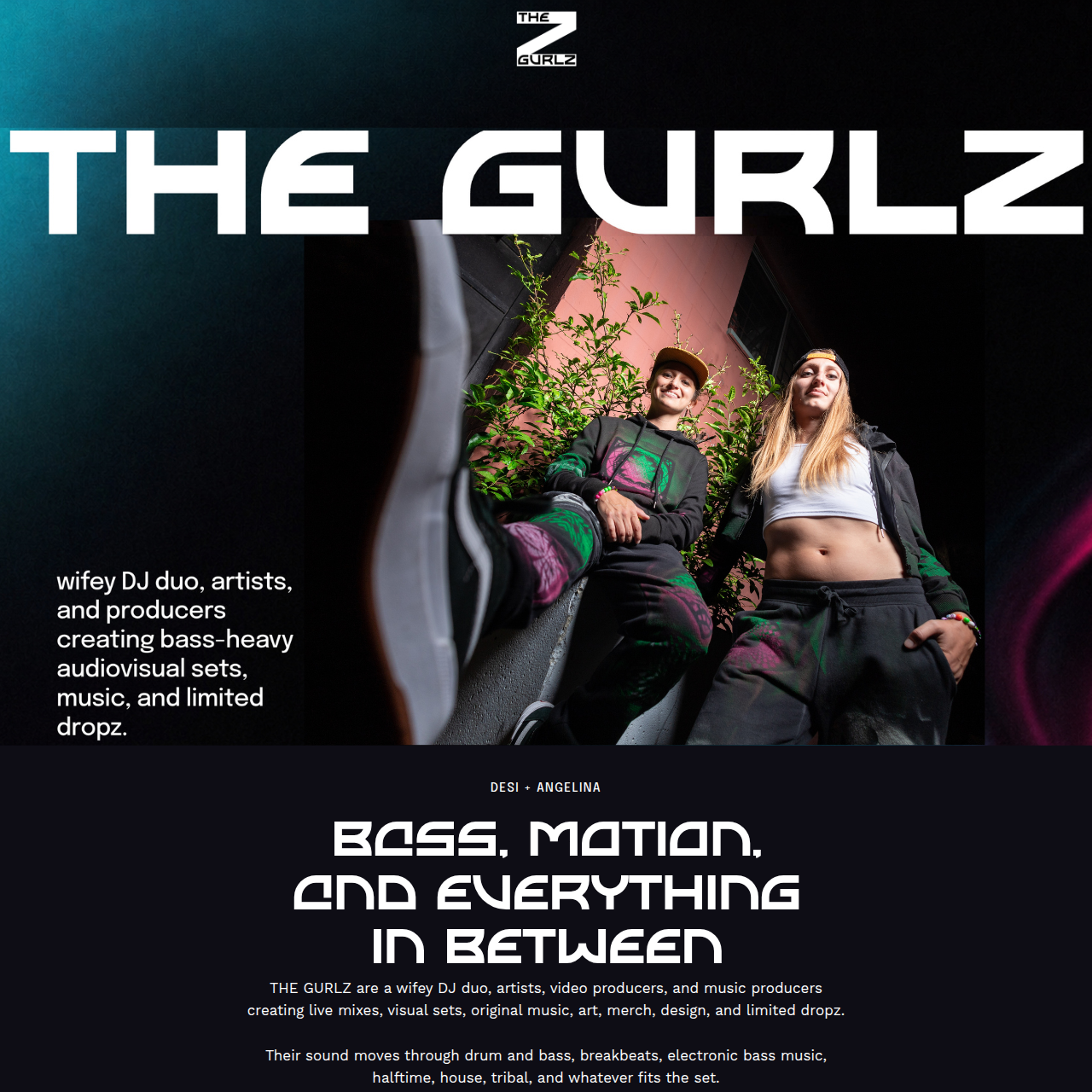
Bass & Breakz at Sunset Cliffs was where this format started. House in the Wild continued it. Each set moves through drum and bass, breakbeats, halftime, and house, with visuals built from the location itself. The color, the movement, the texture of the place all become part of the edit. Halftime’s spacious grooves are part of what makes that visual pacing work. The music slows the eye down. The visuals fill the space the music creates. Watch the location-based DJ sets to see how halftime sounds and looks when it is built into a full audio-visual experience.
FAQ
What is the halftime music genre in simple terms?
Halftime is an electronic bass music genre where drum patterns create a half-speed rhythmic feel over a track running at 130–150 BPM. The listener perceives the groove at 65–75 BPM, producing a spacious, heavy sound.
How is halftime different from dubstep?
Halftime prioritizes atmosphere, space, and evolving textures. Dubstep uses more aggressive, distorted energy and does not rely on the 2:1 BPM ratio as its defining structural feature.
Who are some artists known for halftime music?
Ivy Lab and Alix Perez are widely recognized for defining the halftime sound, using controlled space and evolving sound design to create tracks that feel heavy without being loud.
Is drumstep the same as halftime?
Drumstep is a drum and bass sub-genre running at 174 BPM that uses halftime drum patterns as a technique. Halftime is a separate genre with a different tempo range and a distinct atmospheric identity.
How do DJs use halftime in a live set?
DJs use the 2:1 tempo relationship to transition between drum and bass at 174 BPM and house music near 87 BPM, placing a halftime track at the pivot point for a smooth, musical shift.
IG: @thegurlzmusic, main social for behind-the-scenes and exclusive content
TikTok: @thegurlzofficial
Youtube: @TheGurlzOfficial
SoundCloud: https://soundcloud.com/thegurlz
www.thegurlzofficial.com
Recommended
- What Is Peak-Time DJ Music? A Festival Guide – ☀︎THE GURLZ ☽ – WIFEY DJ DUO / ARTISTS / PRODUCERS
- Bass Music Tempos for Dancers: The Complete BPM Guide – ☀︎THE GURLZ ☽ – WIFEY DJ DUO / ARTISTS / PRODUCERS
- House vs. Bass Music: What’s the Real Difference? – ☀︎THE GURLZ ☽ – WIFEY DJ DUO / ARTISTS / PRODUCERS
- Bass Music Production Styles Compared: 2026 Guide – ☀︎THE GURLZ ☽ – WIFEY DJ DUO / ARTISTS / PRODUCERS


