
TL;DR:
- Danceable music relies on rhythmic elements like beat strength and bass presence to activate the brain’s reward system. Moderately syncopated rhythms and structured drops heighten anticipation, motivating physical movement. Visual elements and strategic restraint enhance the overall groove, making music truly feel like it moves the body.
Danceable music is defined by rhythmic and structural features that directly motivate bodily movement and pleasure. The urge to dance is not random. It follows from specific, measurable qualities in the music itself. A six-factor danceability model assigns 22% weight to beat strength, 20% to tempo fitness, 20% to groove factor, 16% to rhythmic energy, 8% to groove clarity, and 14% to bass presence. Those numbers tell a clear story: rhythm and bass are the engine. Neuroscience calls the feeling “groove,” a pleasurable desire to move that links rhythm perception to the body’s reward system. THE GURLZ, a wifey DJ duo producing immersive audio-visual sets across drum and bass, breakbeats, and house, build every mix around exactly these forces.
What makes music danceable? Rhythm, tempo, and the beat
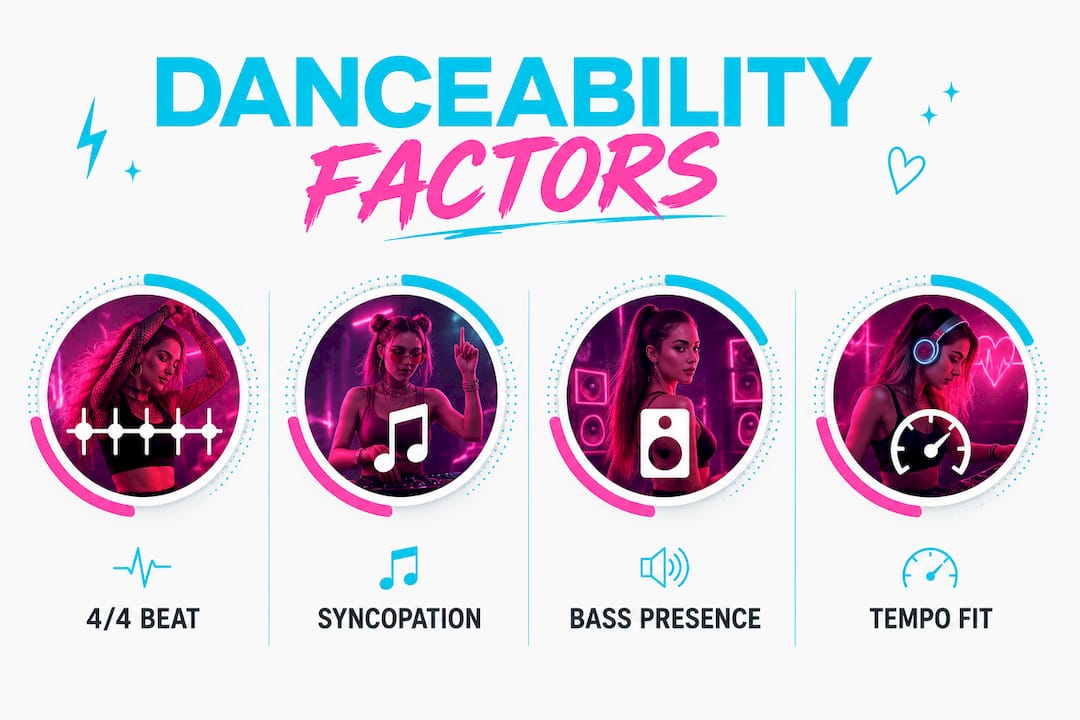
The most fundamental element of danceable music is a steady, predictable pulse. Four-on-the-floor kick patterns, where a kick drum lands on every beat of a 4/4 bar, create the mechanical drive that locks a body into motion. House music runs at 124–126 BPM, a tempo range that aligns naturally with human walking pace and elevated heart rate during light movement. That alignment is not a coincidence. It is why house floors fill up fast.
Syncopation adds the second layer. A perfectly on-beat rhythm is easy to follow but boring quickly. Syncopated rhythms place notes slightly off the expected grid, creating small moments of surprise that the brain works to resolve. Groove peaks at moderate syncopation, where the balance between predictability and novelty is just right. Too simple, and the brain disengages. Too complex, and the body loses the thread.
Backbeat snares on beats two and four, combined with off-beat hi-hats, are the classic tools for building this tension. They sit against the kick drum and create a rhythmic conversation the body wants to join. How rhythm influences dancing comes down to this push and pull between anchor beats and syncopated accents.
Key rhythmic elements that drive danceability:
- Four-on-the-floor kick: One kick per beat, every bar, at consistent velocity
- Backbeat snare: Lands on beats two and four, creating forward momentum
- Off-beat hi-hats: Subdivide the beat and add rhythmic texture
- Syncopated bassline: Moves around the kick to create groove without clashing
- Ghost notes: Quiet snare hits that fill space and add human feel without disrupting the pulse
Pro Tip: When producing for the dance floor, set your kick velocity between 100 and 110 and leave it there. Consistent kick velocity is what gives electronic dance music its mechanical, driving energy. Humanizing the kick undermines clarity on large club systems.
How structure and production shape the dance floor experience
Arrangement is the architecture of danceability. A track that never builds or releases gives dancers nowhere to go emotionally. Standard electronic dance music follows a clear path: Intro, Build, Drop, Break, Drop, Outro. Tracks run 6–8 minutes to give DJs room to mix in and out cleanly. The 16–32 bar intro exists specifically for that transition, not for the listener at home.
The drop is where danceability peaks. Before it arrives, producers strip the kick drum out entirely. That absence creates physiological tension. The body anticipates the beat returning. When it does, the release is physical, not just emotional. This technique appears across house, drum and bass, and bass music, and it works every time because the brain is wired for predictive timing.
Here is the standard production sequence for a high-energy drop:
- Establish the groove in the intro with kick, bass, and a simple hi-hat pattern
- Build tension by layering synths, raising a filter, or adding a rising noise sweep over 8–16 bars
- Remove the kick in the final 1–2 bars before the drop to create silence and anticipation
- Hit the drop with full kick, bass, and lead elements returning simultaneously
- Sustain energy through the drop with consistent four-on-the-floor kicks and a locked bassline
- Break it down by pulling elements back, then rebuild for a second drop
Sidechain compression is the production technique that ties the kick and bass together. The kick triggers a compressor on the bass channel, ducking the bass volume momentarily every time the kick hits. The result is the pumping, breathing sensation that defines bass-heavy dance music. Without it, kick and bass fight for the same low-frequency space and the mix turns muddy.
Pro Tip: Set your sidechain compressor with a fast attack (1–5ms) and a medium release (50–100ms) to get a clean pump without cutting the bass too aggressively. The goal is clarity and movement, not silence.
Why does bass make you want to move?
Bass presence accounts for 14% of the danceability score in electronic music models. That number understates the physical reality. Low frequencies are felt in the chest, the stomach, and the feet before they are consciously heard. Bass is the part of music that the body registers as physical contact.
Sub-bass, typically a pure sine wave tuned to the root note of the chord, provides the foundation. It sits below 60Hz and is almost entirely felt rather than heard on most speakers. Above it, a mid-bass layer adds harmonic content that carries through smaller systems and headphones. Bass syncopates with the kick on a 16th note grid, avoiding direct overlap so the two elements share space without masking each other.
| Bass technique | Frequency range | Function |
|---|---|---|
| Sub-bass (sine wave) | 20–60 Hz | Physical sensation, root note foundation |
| Mid-bass | 60–200 Hz | Harmonic content, audible on smaller systems |
| Rolling bassline | 80–150 Hz | Rhythmic groove, syncopated with kick |
| Sidechain compression | Across bass range | Clarity, pumping effect, rhythmic pulse |
Keeping bass in mono is a practical requirement for club sound systems. Stereo bass causes phase cancellation on large PA rigs, which weakens the low end exactly where you need it most. Bass-driven dance music depends on mono bass for maximum impact on the floor.
Key bass production practices for danceability:
- Keep all bass below 150–200 Hz in mono
- Layer sub-bass and mid-bass separately for control
- Sidechain the entire bass chain to the kick drum
- Tune the sub-bass to the root note of each chord or section
- Use a high-pass filter on all non-bass elements to protect low-frequency space
What does neuroscience say about groove and the urge to dance?
Groove is the technical term for the pleasurable desire to move that music produces. It is not a metaphor. The nucleus accumbens and medial orbitofrontal cortex activate during groove experiences, linking dopaminergic reward activity directly to rhythmic perception. The brain does not just enjoy the music. It physically motivates the body to move in response.
The mechanism behind this is predictive coding. The brain builds an internal model of the rhythm and constantly updates it as the music plays. Moderate syncopation creates small prediction errors that the brain finds pleasurable to resolve. This is why danceability peaks at intermediate syncopation levels rather than at maximum complexity or maximum simplicity. The sweet spot is challenge without confusion.
“Groove is a pleasurable urge to move to music, emerging from the coupling of rhythmic drive, moderate syncopation, and the brain’s reward system. It is not just felt. It is neurologically motivated. Rhythms that balance predictability with surprise activate dopaminergic pathways, making movement feel rewarding rather than effortful.”
Danceability is also relational and context-dependent. The same track hits differently in a dark club versus a living room. Environment, crowd energy, and physical space all shape how strongly the music induces movement. Listeners describe dance-inducing music as rhythmically driven and percussive. Non-dance music, by contrast, is described as contemplative and suited for stillness. The distinction is not about quality. It is about function.
Bass music production styles across drum and bass, halftime, and house each exploit groove differently. Drum and bass uses high BPM with syncopated breakbeats. Halftime slows the perceived tempo while keeping the sub-bass heavy. House locks the four-on-the-floor kick and lets the bassline carry the groove. Each approach targets the same neurological response through different rhythmic strategies.
Key Takeaways
Danceable music requires beat strength, tempo fitness, groove, rhythmic energy, and bass presence working together to trigger the brain’s reward system and motivate physical movement.
| Point | Details |
|---|---|
| Beat strength leads danceability | A consistent four-on-the-floor kick at steady velocity creates the mechanical pulse the body locks onto. |
| Tempo must match movement | House music at 124–126 BPM aligns with natural human movement rhythms for maximum dance engagement. |
| Syncopation drives groove | Moderate off-beat rhythms create pleasurable prediction errors that the brain resolves through movement. |
| Bass is felt, not just heard | Sub-bass and mid-bass layers provide physical sensation that reinforces the urge to move on the dance floor. |
| Structure shapes the experience | Build-ups, kick-free tension moments, and drops create emotional arcs that sustain dance energy across a full track. |
THE GURLZ on what actually makes a set move
The science is real, but the science alone does not make a room move. What I have learned producing and mixing live is that the physical elements, the kick, the bass, the drop, only work when they feel intentional. A perfectly quantized track with textbook sidechain compression can still fall flat if there is no arc, no sense that something is about to happen.
What Desi and I do differently is build the visual world around the audio arc. When we filmed Bass & Breakz at Sunset Cliffs, the light, the movement of the water, and the edit rhythm all followed the music. The drop hit harder because the visual cut matched it. That is not decoration. It is a second layer of the groove response, something the body registers through the eyes and the ears at the same time.
The most underrated element of danceability is restraint. Producers who fill every bar with sound give the listener nowhere to breathe and nothing to anticipate. The silence before the drop, the stripped-down break, the moment where only the hi-hat is running: those are the moments that make the return of the bass feel like a physical event.
For producers starting out, the advice is simple. Get the kick and bass relationship right first. Everything else builds on that foundation. Learn what BPM ranges feel like in your body before you commit to a tempo. Then build the structure around the drop, not the other way around.
— THE GURLZ OFFICIAL
THE GURLZ audio-visual sets: music built to move
THE GURLZ produce every set from the ground up. Desi and Angelina mix live, film the location, and edit the visuals to follow the music closely. The result is music you can watch and feel at the same time.
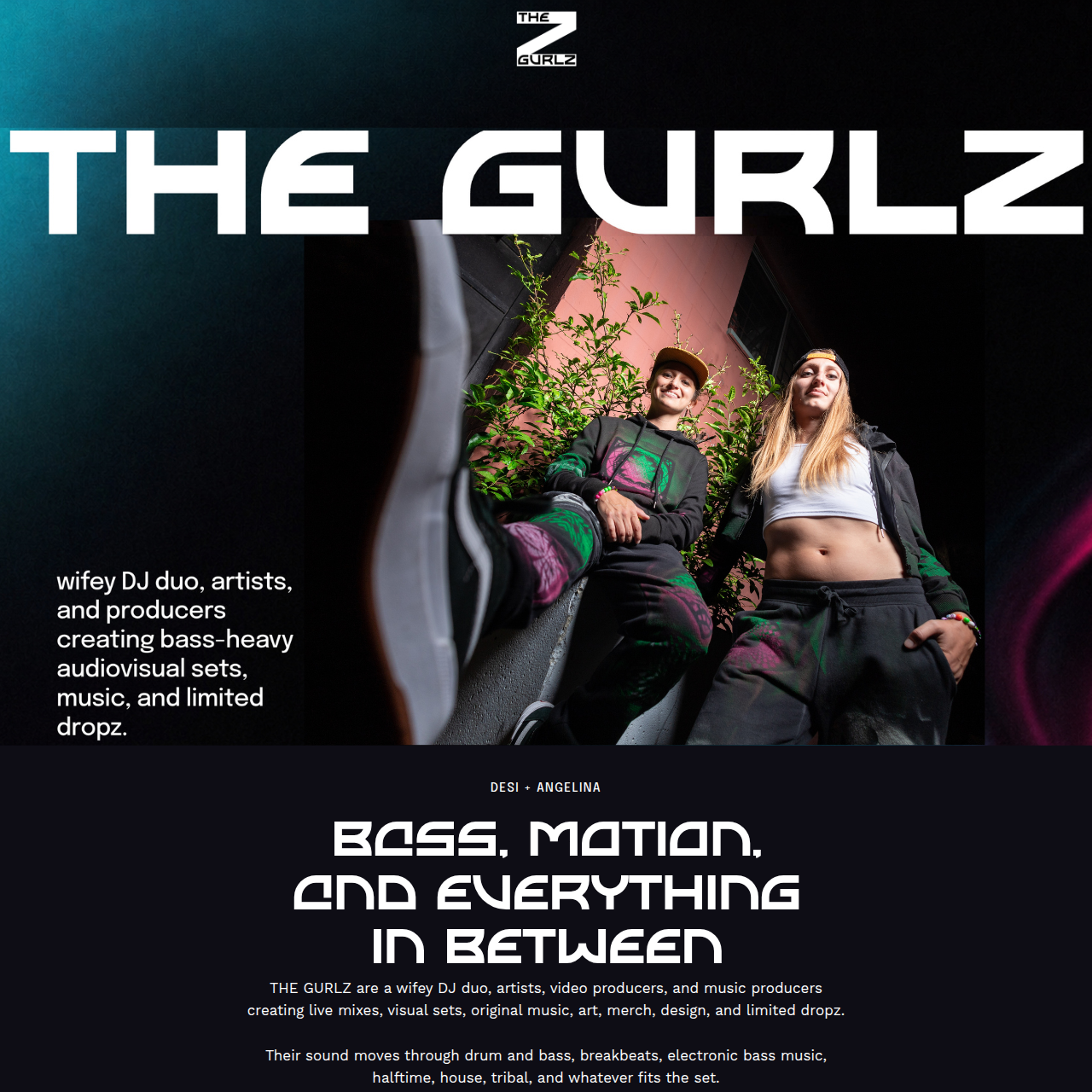
Bass & Breakz at Sunset Cliffs was the first set in this format. House in the Wild continued it. Both are available now, and more audio-visual setz are already in production. If you want to see what danceable music looks like when the production, the location, and the live mix are all built around the same groove, explore THE GURLZ sets on the website. Original music from their studio is coming soon. For a broader look at what this format can be, check out location-based DJ sets worth watching.
IG: @thegurlzmusic, main social for behind-the-scenes and exclusive content
TikTok: @thegurlzofficial
Youtube: @TheGurlzOfficial
SoundCloud: https://soundcloud.com/thegurlz
www.thegurlzofficial.com
FAQ
What are the main elements of danceable music?
The six primary elements are beat strength, tempo fitness, groove factor, groove clarity, rhythmic energy, and bass presence. Beat strength and tempo fitness carry the most weight in electronic music danceability models.
What BPM is best for dance music?
House music runs at 124–126 BPM, which aligns with natural human movement rhythms. Different genres use different ranges, and the right BPM depends on the style and the physical energy the track is designed to produce.
What is groove in music?
Groove is the pleasurable urge to move that music creates, linked to dopaminergic activity in the brain’s reward centers. It peaks at moderate syncopation levels, where rhythmic patterns are predictable enough to follow but varied enough to stay engaging.
Why does bass make music feel more danceable?
Low frequencies are physically felt in the body before they are consciously heard. Bass presence provides the physical sensation that reinforces the urge to move, especially when sidechain compression locks the bass rhythm to the kick drum.
How does sidechain compression affect danceability?
Sidechain compression ducks the bass volume each time the kick hits, preventing low-frequency muddiness and creating the pumping, breathing sensation that defines bass-heavy dance music. It is the production technique that gives electronic music its physical rhythmic pulse.
Recommended
- The Role of BPM in Dance Music: A Dancer’s Guide – ☀︎THE GURLZ ☽ – WIFEY DJ DUO / ARTISTS / PRODUCERS
- Why Breakbeats Are Unique in Dance Music – ☀︎THE GURLZ ☽ – WIFEY DJ DUO / ARTISTS / PRODUCERS
- Bass-Driven Dance Music: What Festival-Goers Need to Know – ☀︎THE GURLZ ☽ – WIFEY DJ DUO / ARTISTS / PRODUCERS
- Bass Music Tempos for Dancers: The Complete BPM Guide – ☀︎THE GURLZ ☽ – WIFEY DJ DUO / ARTISTS / PRODUCERS


