
TL;DR:
- Female dancers return to drum and bass because its half-time perception and rhythmic complexity make fast music feel controllable and expressive. Community groups like Girls Who DnB foster supportive spaces that emphasize physical, mental, and emotional benefits, making DnB more accessible.
Drum and bass is the genre female dancers keep returning to, and the reasons go deeper than the beat. Known in the scene simply as DnB, this genre runs at 160–180 BPM but feels closer to 80–90 BPM in half-time, creating a perceptual trick that makes fast music feel controllable and expressive. Female-led collectives like Girls Who DnB have built community spaces around the genre, while fitness programs like Brass Ovaries’ TnB Twerk & BAEs class have turned DnB into a full-body workout. The result is a genre that hits physically, mentally, and culturally, all at once.
Why DnB is popular with female dancers: the tempo explains everything
DnB’s danceability is not accidental. Tracks run at 160–180 BPM but are perceived at half that speed when dancers lock onto the snare on beats two and four. That perception shift is the foundation of every DnB dance style worth knowing.
Syncopated drum patterns and rolling basslines give dancers multiple rhythmic hooks to latch onto. You are not forced to match the raw BPM. Instead, you ride the groove underneath it, which is where the real movement lives.
Specialized styles like DnB Step make this explicit. The DnB Step style prioritizes flow, swing, and ghost notes over raw speed. Instructors teach dancers to stay connected with the music’s internal pulse rather than chase every sixteenth note on the surface. That approach prevents burnout and keeps the movement looking effortless.
- Half-time feel: Locking onto the snare at beats two and four drops the perceived tempo from 170 BPM to roughly 85 BPM.
- Ghost notes: Subtle drum hits between main beats give dancers extra rhythmic texture to play with.
- Rolling basslines: The low-end movement creates a physical sensation that guides body weight and timing.
- Syncopation: Off-beat accents reward dancers who listen closely, making freestyle feel musical rather than mechanical.
Pro Tip: When you first practice to DnB, ignore the hi-hats entirely. Find the snare, feel the half-time pulse, and build your movement from there. Speed comes later.
The genre’s rhythmic architecture rewards patience. Female dancers who invest time in understanding DnB’s structure consistently report that the music starts to feel like a conversation rather than a challenge.
What are the physical and psychological benefits of DnB for female dancers?
DnB is a full-body workout disguised as a night out. The Brass Ovaries TnB Twerk & BAEs class uses DnB specifically for one-hour sessions that blend cardiovascular training with core stability and strength work. The music drives the intensity without the session ever feeling like exercise in the traditional sense.
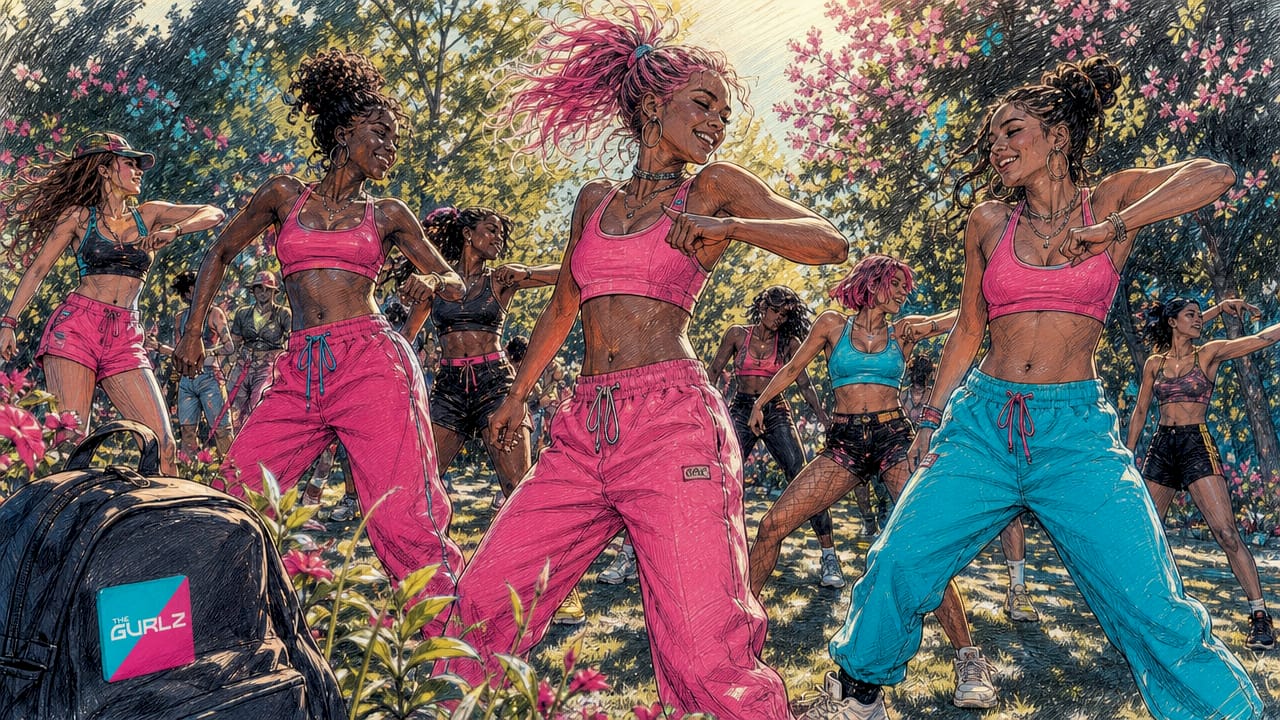
The psychological benefits are just as real. Rhythmic complexity aids meditative immersion, pulling dancers into a flow state where perceived exertion drops and focus sharpens. Sports science research confirms that rhythmic music facilitates these flow states, leading to enhanced well-being and less fatigue during intensive movement.
DnB’s heavy bass and syncopated drums also deliver something harder to quantify: cathartic release. The heavy bass and syncopation give dancers a physical channel for tension, frustration, and energy. Movement becomes expressive rather than just athletic.
Here is what female dancers consistently report gaining from regular DnB dance practice:
- Cardiovascular endurance built through sustained high-energy movement over 45–60 minutes.
- Core strength developed by the constant weight shifts and low-center-of-gravity movements DnB demands.
- Psychological flow triggered by the genre’s rhythmic complexity, reducing perceived effort.
- Emotional release through bass-driven movement that channels tension into confidence.
- Body awareness sharpened by learning to respond to subtle rhythmic cues rather than obvious beats.
Pro Tip: If you want the full fitness benefit, choose a DnB set with rolling basslines and minimal vocal breaks. Continuous rhythm keeps your heart rate elevated and your focus locked.
The combination of physical output and mental absorption is rare in fitness contexts. DnB delivers both in a single session, which is a significant part of why the genre holds female dancers’ attention long-term.
How do female-led communities shape DnB dance culture?
Community is the engine behind DnB’s growth among female dancers. Collectives like Girls Who DnB have built spaces where women engage with the genre’s energy on their own terms, merging wellness programming with DnB culture and creating environments that feel genuinely supportive rather than performative.
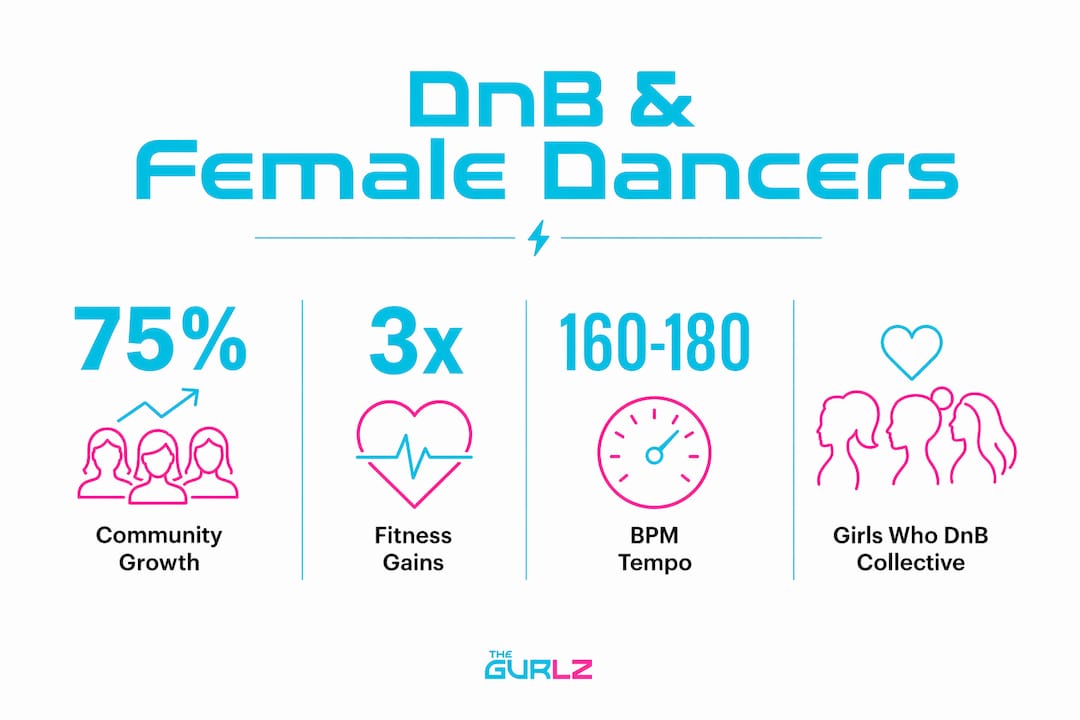
These collectives do something the broader scene has historically struggled with: they make the aggressive sonic energy of DnB feel accessible rather than intimidating. Events blend dance, wellness, and shared experience in formats that center female participation rather than treat it as a side note.
The cultural tension in DnB is real. Smaller grassroots events preserve the raw, break-heavy aesthetic that freestyle dancers depend on, while mainstream events lean toward vocalist-driven radio productions. Female-led collectives tend to operate in the grassroots space, which keeps the dancing authentic and the community tight.
- Wellness integration: Events combine DnB with movement workshops, breathwork, and community building.
- Safe spaces: Female-led formats reduce the social friction that can make underground scenes feel exclusionary.
- Shared identity: Dancers find community with others who use DnB as a form of expression, not just entertainment.
- Skill sharing: Collectives pass down DnB-specific movement techniques, preserving the genre’s dance culture.
“DnB gives us a space to be powerful, precise, and completely free at the same time. That combination is rare.” — Girls Who DnB community voice
The growth of these collectives reflects a broader shift. Female dancers are not just participating in DnB culture. They are actively building it, curating it, and passing it forward.
How does TikTok and digital culture drive DnB’s appeal to female dancers?
TikTok changed the discovery path for DnB. The platform’s algorithm favors 170 BPM tracks with half-time hooks and melodic vocal layers, which happen to be exactly the production choices that make DnB accessible to new dancers. The genre found a new audience without changing its core identity.
Producers T & Sugah note that DnB’s alignment with fast-paced digital culture makes it feel current and energizing for today’s dancers. The genre matches the high-stimulation consumption patterns of a generation that processes content quickly and responds to music that rewards close attention.
Vocal integration has also expanded DnB’s reach. Tracks with melodic vocals over rolling basslines perform well on streaming platforms and in dance content, making the genre more radio-friendly without stripping its rhythmic complexity. Female dancers benefit from this because the vocal hooks give them melodic anchors alongside the rhythmic ones.
| Platform factor | Effect on female dancers |
|---|---|
| TikTok algorithm | Surfaces half-time DnB tracks to dance-focused audiences |
| Vocal layering | Adds melodic hooks that complement rhythmic movement |
| Streaming playlists | Makes DnB discoverable outside traditional club contexts |
| Short-form video | Lets dancers share DnB movement styles to growing audiences |
The tension between mainstream accessibility and underground authenticity remains. Female dancers who find original bass music outside algorithm-driven playlists often develop a deeper connection to the genre’s roots. Both paths are valid. The digital entry point matters less than where the music takes you next.
Key Takeaways
DnB is popular with female dancers because its half-time rhythmic structure, physical intensity, and female-led community culture combine to create an experience that is both physically demanding and deeply expressive.
| Point | Details |
|---|---|
| Half-time perception | DnB at 160–180 BPM feels like 80–90 BPM, making fast music danceable and controllable. |
| Physical fitness | One-hour DnB dance sessions build cardiovascular endurance, core strength, and body awareness. |
| Flow state | Rhythmic complexity triggers meditative immersion, reducing fatigue and increasing well-being. |
| Community power | Female-led collectives like Girls Who DnB create supportive spaces that grow the genre’s dance culture. |
| Digital discovery | TikTok’s algorithm surfaces DnB to new female dancers through half-time hooks and vocal-led tracks. |
THE GURLZ on what DnB really gives female dancers
The conversation around DnB and female dancers often focuses on the music itself. The tempo, the bass, the rhythm. Those things matter. But what we see, and what we feel every time we play a set, is that DnB gives women a specific kind of permission. Permission to take up space. Permission to be loud, physical, and completely present in their bodies.
We have watched dancers connect with DnB in ways that go beyond entertainment. The genre asks something of you. It rewards attention and punishes passivity. Female dancers who commit to it tend to develop a relationship with the music that feels personal, almost private, even in a crowd of hundreds.
The women reshaping bass music are not waiting for the scene to make room. They are building their own rooms. Collectives, classes, events, and audiovisual experiences that center female energy and expression. That is the part of DnB culture that does not show up in tempo charts or streaming data.
What we know from building immersive audio-visual sets is that the visual dimension amplifies everything the music already does. When the bass hits and the visuals respond, the physical and emotional experience compounds. Female dancers in that environment are not just moving to music. They are inside it.
The underground roots of DnB matter. The raw, break-heavy aesthetic that grassroots events protect is the same aesthetic that makes freestyle dancing feel alive. Mainstream popularity is fine. But the real energy lives in the spaces where the music is still a little dangerous and the dancing is completely free.
— THE GURLZ OFFICIAL
THE GURLZ and the female DnB experience
THE GURLZ, the wifey DJ duo of Desi and Angelina, build sets that live at the intersection of DnB culture and visual art. Their audio-visual DJ sets are produced, filmed, mixed, and edited entirely by them, with music mixed live and visuals drawn from the location and world around the set.
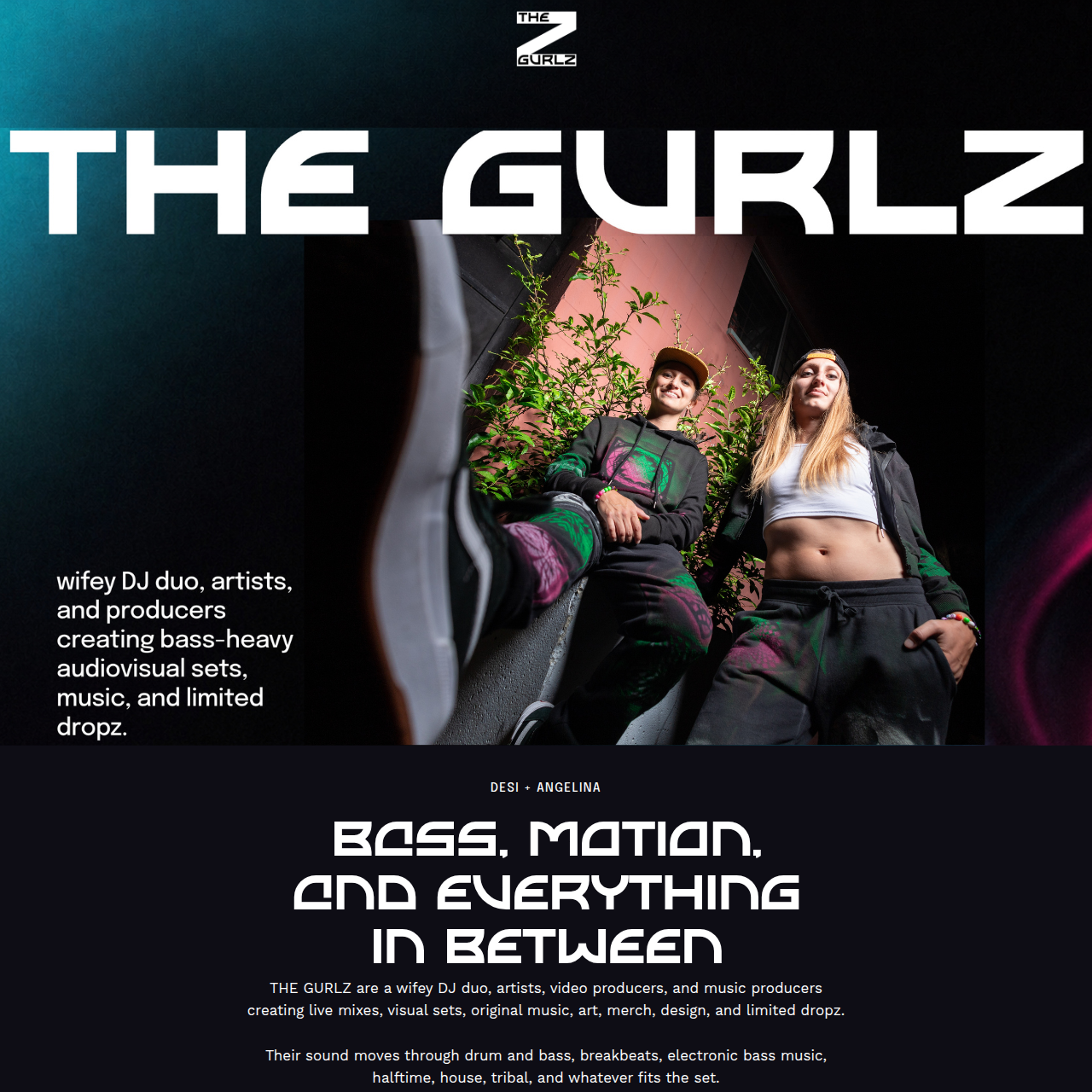
Bass & Breakz at Sunset Cliffs started the format. House in the Wild continued it. Every release pushes the experience further. If you want to feel what DnB looks like when the music and the visual world are built together, the full audio-visual set catalog is the place to start. Original music from their studio is coming soon, along with more sets already in motion.
FAQ
Why is DnB so appealing to female dancers specifically?
DnB’s half-time rhythmic structure makes fast music feel controllable, while its bass-driven intensity supports both physical expression and emotional release. Female-led collectives have also built community spaces that make the genre more accessible and culturally welcoming.
What BPM does DnB run at, and how does that affect dancing?
DnB tracks run at 160–180 BPM but are perceived at 80–90 BPM when dancers lock onto the half-time snare beat. That perception shift is what makes DnB feel danceable rather than overwhelming.
What are the fitness benefits of dancing to DnB?
One-hour DnB dance sessions build cardiovascular endurance, core stability, and strength. The rhythmic complexity also triggers psychological flow states, reducing perceived fatigue during high-intensity movement.
What is Girls Who DnB?
Girls Who DnB is a female-led collective that creates community spaces merging wellness programming with DnB culture, providing supportive environments for women to engage with the genre.
How has TikTok changed DnB’s reach among female dancers?
TikTok’s algorithm promotes 170 BPM tracks with half-time hooks and vocal layers, surfacing DnB to dance-focused audiences who might not have found the genre through traditional club or radio channels.
IG: @thegurlzmusic, main social for behind-the-scenes and exclusive content
TikTok: @thegurlzofficial
Youtube: @TheGurlzOfficial
SoundCloud: https://soundcloud.com/thegurlz
www.thegurlzofficial.com


